
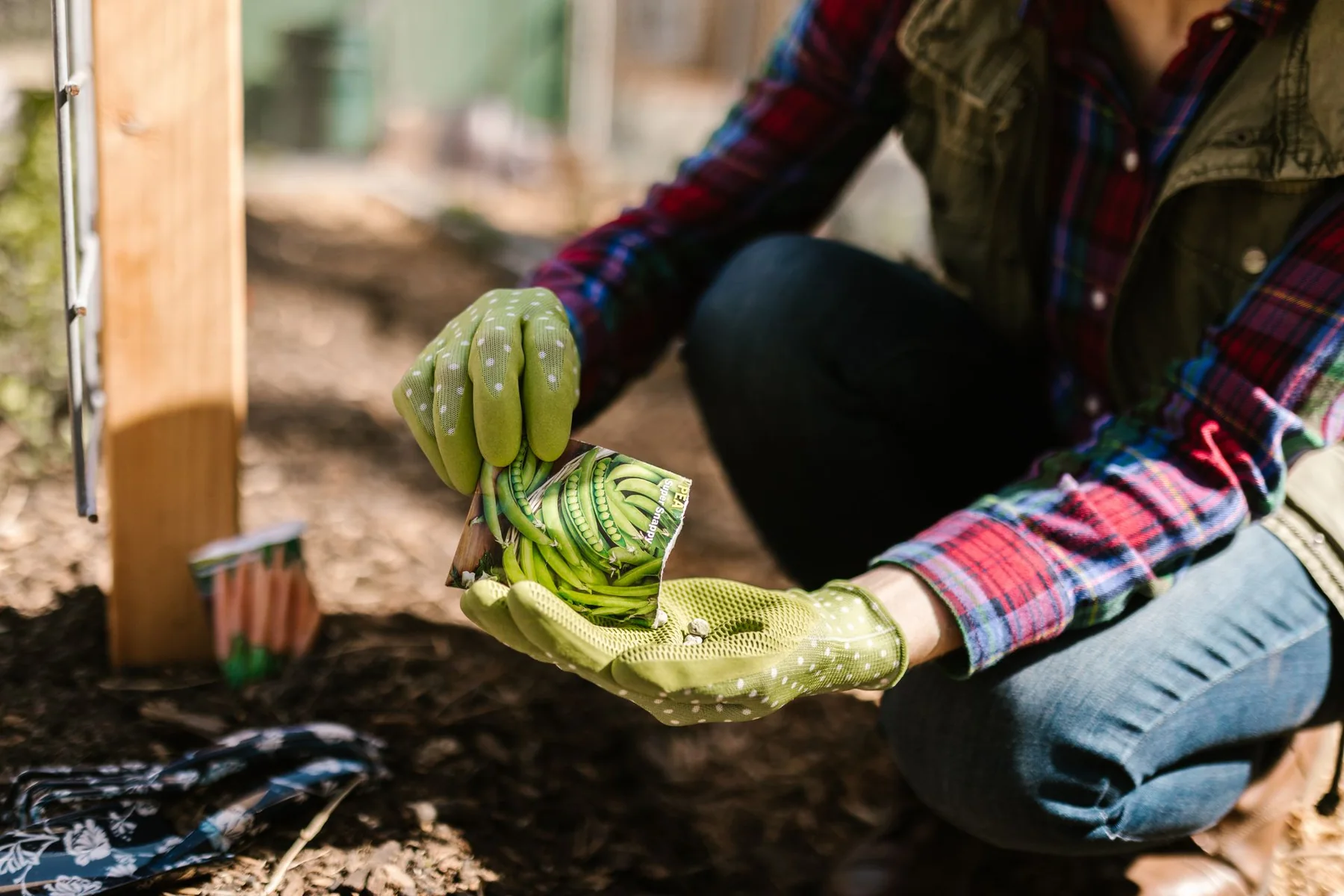
A seed library does not need a room full of shelves. For an apartment grower, it can be a labeled box, a shared spreadsheet, and a clear agreement about what a packet means. The difficult work is not collecting the largest number of seeds; it is keeping identity and uncertainty attached to each lot. A few well-described varieties are more useful than a crowded drawer of anonymous seed.
Decide what the collection is for
Before accepting a harvest, define the library’s audience and limits. A balcony seed box may focus on crops that perform in containers, varieties suited to a short season, or seed that a building’s residents have grown themselves. Choose a handful of categories and say what the library does not accept. That keeps the collection aligned with available space and helps readers distinguish a home-grown lot from a commercially packaged seed packet.
Open-pollinated varieties are the clearest starting point when growers want plants similar to the parent. Seeds saved from many F1 hybrids will not reliably reproduce the same characteristics. Some crops cross readily with related varieties, while others are more likely to self-pollinate. Penn State Extension’s current seed-saving guide recommends beginning with crops such as peas, beans, tomatoes, peppers, and lettuce while still acknowledging possible cross-pollination. A balcony’s closeness does not make pollen movement disappear.
Define a minimum label before the first packet enters the library. At a minimum, record common crop, variety name if known, source grower, harvest year, and whether the seed was purchased or saved. Add the neighborhood or broad climate region, isolation or crossing notes, and any uncertainty that could affect a future grower’s expectations. Never invent a variety name from fruit color or shape.
Treat each harvest as a small lot
Keep seed from separate plants and harvests apart until you deliberately decide to combine them. A lot might be one plant, a group of plants from the same variety, or one packet from a named supplier; write down which. This is useful when an unexpected trait appears. If every source is mixed in one jar, you cannot investigate whether the cause was variety, crossing, a lost label, or a poor growing season.
Clean and dry seed before storing it. Wet-fruited crops such as tomatoes need their own cleaning process; dry-fruited peas and beans should mature on the plant before harvest. Flower seed should be collected after the heads or pods are mature and dry, but before they shatter. The exact cue differs by crop. A single “collect in fall” date is too vague for a library that wants to preserve useful information.
Use breathable labeled packets inside a closed container in a cool, dry, dark location. Do not leave envelopes on a sunny balcony where temperature and humidity swing. If refrigerator storage is used, make sure each sealed container is fully dry before it goes in and allow it to warm before opening, so condensation does not form on cold seed. Track the storage location so the box can be maintained rather than forgotten.
A packet record that answers real questions
- Identity: crop, variety as supplied, and whether the seed is open-pollinated, hybrid, or unknown.
- Provenance: supplier or grower, harvest year, and the plant or bed from which it came.
- Selection: what trait was intentionally selected and any plants excluded because of disease or off-types.
- Pollination: other compatible varieties nearby, isolation method, or an explicit “unknown.”
- Handling: cleaning method, drying date, storage condition, and quantity added.
- Use note: regional observations, container size, days to maturity from the packet, and any germination result.
The label can be small, but the record should live somewhere readable after the packet is opened. Give each lot a simple ID and keep a matching spreadsheet row. If the spreadsheet goes away, the packet should still tell a grower what it is. If the packet is damaged, the record should still point to the lot rather than a similarly named seed nearby.
Make a small library useful to neighbors
Offer a short instruction card that explains how to claim a packet, what to record after planting, and how to return seed if the grower wants to participate. Do not require a harvest return; some crops fail, and a library should not turn a growing experiment into a debt. Instead, invite participants to share observations, photographs, and the reason a seed lot did or did not fit their space.
For a balcony-specific collection, add container context without promising that a variety is “perfect for pots.” Record pot width and depth, hours of direct sun, wind exposure, and whether the grower used a trellis. These variables explain why the same cultivar can behave differently on two sides of one building. A gardener can compare those notes with their own site rather than relying on a vague “compact” label.
Review the box before each sowing season. Remove empty packets, quarantine any lot with a contamination concern, update the quantity, and flag seed that has aged. A paper germination test can check a small sample, but it consumes seed and reflects the test conditions. Record the sample size and number sprouted; “tested” without those details can sound more certain than the result deserves.
Steward the knowledge as well as the seed
Ask contributors before publishing their names, photographs, or family stories. A variety’s history can be valuable, but the library should separate a documented source from a story that has not been independently verified. Use a note such as “shared by a neighbor; origin not verified” when that is what you know. Keep culturally significant names intact and avoid claiming ownership over a seed simply because it was donated.
Set public expectations for an informal seed library
This model suits a small informal seed library, not a regulated commercial seed program. Labeling, import, plant-health, and distribution rules may apply to particular species or locations. Seed viability and varietal identity cannot be guaranteed by a library’s record alone. Use local Extension guidance when handling seed from diseased plants, and make the known unknowns visible to every borrower.
Sources and further reading
- Seed Saving Basics — Penn State Extension
Seed identity, parent-plant selection, pollination risk, drying, storage, and labeling.
- Saving vegetable seeds — University of Minnesota Extension
Open-pollinated seed, crop differences, healthy source plants, and home storage.