
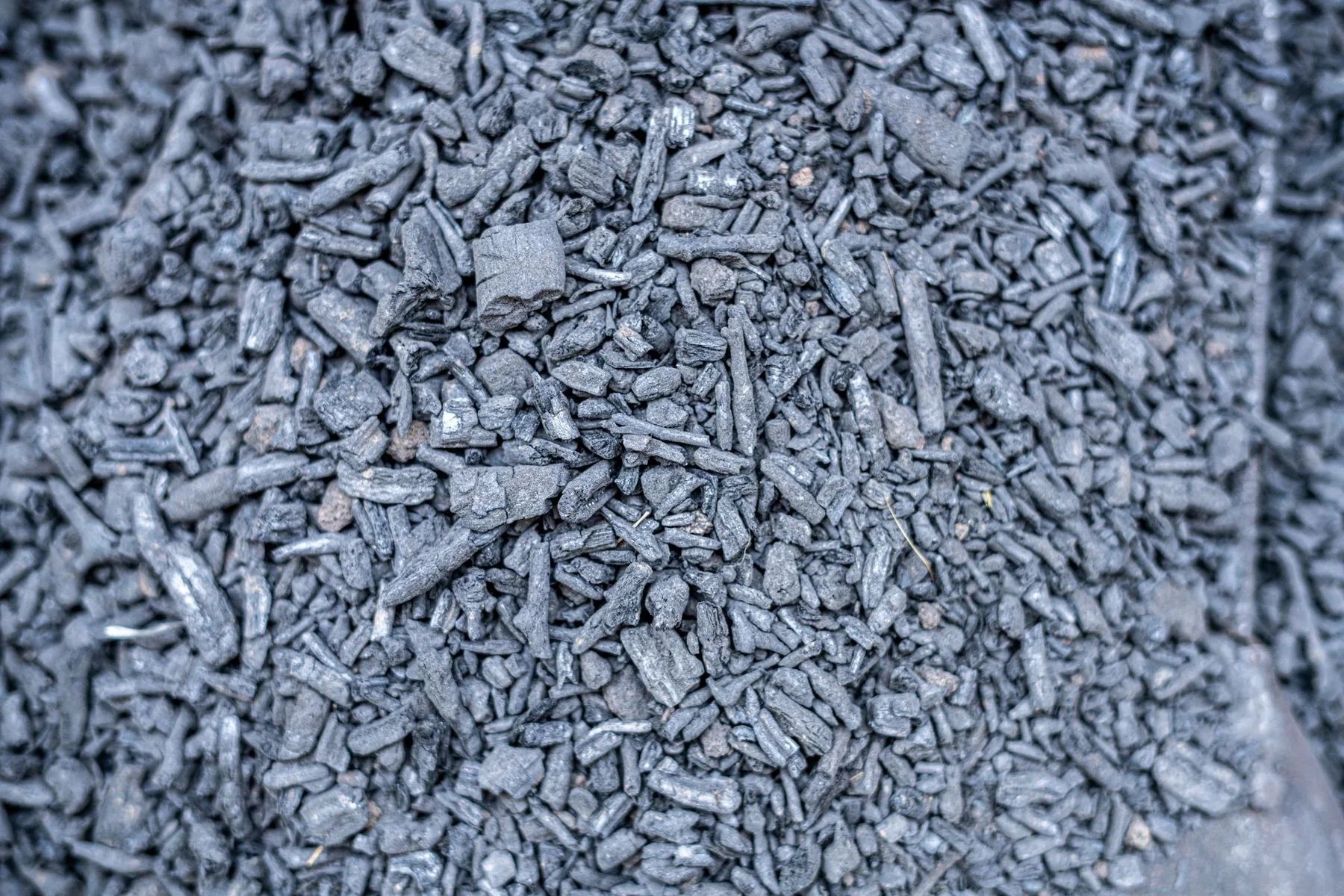
Biochar is not a universal fertilizer and should not be added to balcony pots simply because it is black and marketed as “soil improving.” It is a carbon-rich material whose effects vary with feedstock, production, soil, crop, and rate. Utah State Extension reports both positive, neutral, and negative results across biochar studies and says more work is needed to quantify effects across climates and cropping systems. For a small container, that uncertainty argues for a measured trial.
Identify the material before using it
Biochar is produced by heating biomass with little or no oxygen. It is not the same as charcoal briquettes, ash, or partially burned wood from a household fireplace. Briquettes can contain binders or additives, and ash changes soil chemistry in a different way. Use a product intended for horticultural or soil use and check the feedstock, production information, and any test data available from the supplier.
Avoid material from painted, treated, glued, or chemically contaminated wood. Do not crush dry char in an indoor space; fine dust can irritate lungs and surfaces. Wear suitable respiratory protection when the product label or safety data calls for it, and work outdoors with the dust controlled. Keep biochar away from children and pets until it is incorporated and the area is cleaned.
Check the container’s existing medium before adding any amendment. If the potting mix is healthy, drains well, and supports the crop, biochar may not solve a real problem. If the soil is compacted, nutrient-poor, or hydrophobic, diagnose that issue first. A small container has little buffering capacity; an amendment that changes pH or water movement can affect the whole root zone quickly.
Treat it as an experiment, not a rescue dose
Read crop-specific and product-specific guidance for rate and preparation. Biochar properties vary, so a percentage from one research trial may not fit a balcony pot. Some practitioners blend it with compost or nutrient solution before use, but no universal “charging” recipe suits every product and crop. Do not mix dry biochar into a pot and expect it to provide nutrients; it is generally used as a soil amendment rather than a complete fertilizer.
If you decide to test it, use two identical small pots with the same plant, medium, water, and light. Add biochar only to one pot at a conservative amount supported by a reliable source. Record the product, feedstock, rate, preparation, and date. Avoid adding other amendments during the comparison, otherwise you will not know which change affected the plant.
Weigh each pot after watering if a kitchen scale can handle the load, or measure the water poured in and collected below. Use the same method every time and record the interval until the surface begins to dry. These observations do not prove a yield benefit, but they can show whether this particular mix changed water use enough to matter in your routine.
A balcony-pot trial plan
- Question: state one possible benefit, such as water retention or reduced mix weight.
- Baseline: describe the current medium, pot size, crop, and watering schedule.
- Material: record the brand, feedstock, particle size, and available test information.
- Comparison: keep one untreated pot and one treated pot under similar conditions.
- Measurements: log watering frequency, visible growth, leaf condition, and final harvest.
- Stop rule: discontinue the trial if plants decline, the medium becomes dusty or alkaline, or the product label indicates a risk.
Watch water and nutrients closely
Char can affect how a mix holds water and nutrients, but the direction and size of the effect are not predictable from color or texture alone. Check the pot after watering to see whether water runs through or sits on top. Observe moisture below the surface. If the treated pot dries faster or stays wetter, that is a useful result even if the plants look similar.
Do not raise fertilizer simply because biochar was added. A container may already have adequate nutrients, and excess fertilizer can create salt stress. If leaves change color, inspect light, roots, watering, pH, and signs of pests before changing the feed. A media test may be appropriate after repeated amendments; ask the lab whether it accepts a biochar-containing soilless mix.
Choose another method if the problem is simple
If the pot dries too quickly, a larger container, a more moisture-retentive mix, or shade during the hottest hours may be a clearer intervention. If the medium is compacted, replace a portion with fresh container mix or address root binding. If fertility is low, use a crop-appropriate fertilizer based on the product instructions or test result. Biochar does not replace drainage holes, adequate root volume, or regular observation.
Keep the results in proportion
One balcony trial cannot establish a carbon-sequestration benefit or prove that biochar increases yield. Record only what you measured: whether the mix stayed moist longer, how much water was used, and whether the crop grew differently. A result from a particular product and summer applies to that setup. Share it as a local observation, not a universal recommendation.
When a container should be left unchanged
Biochar research is mixed and material-specific. The cited USU guidance emphasizes variation and the need for more research; the WSU primer discusses home-garden applications and limitations. This article does not provide a universal application rate. Follow product safety information, keep dust controlled, and compare a small treatment with an untreated pot before expanding use.
Sources and further reading
- Biochar in Vegetable Production — Utah State University Extension
Variable outcomes from biochar and the need to match material, soil, and crop.
- Biochar: A Gardener’s Primer — Washington State University Extension
Home-garden uses and limits of biochar as a soil amendment.