
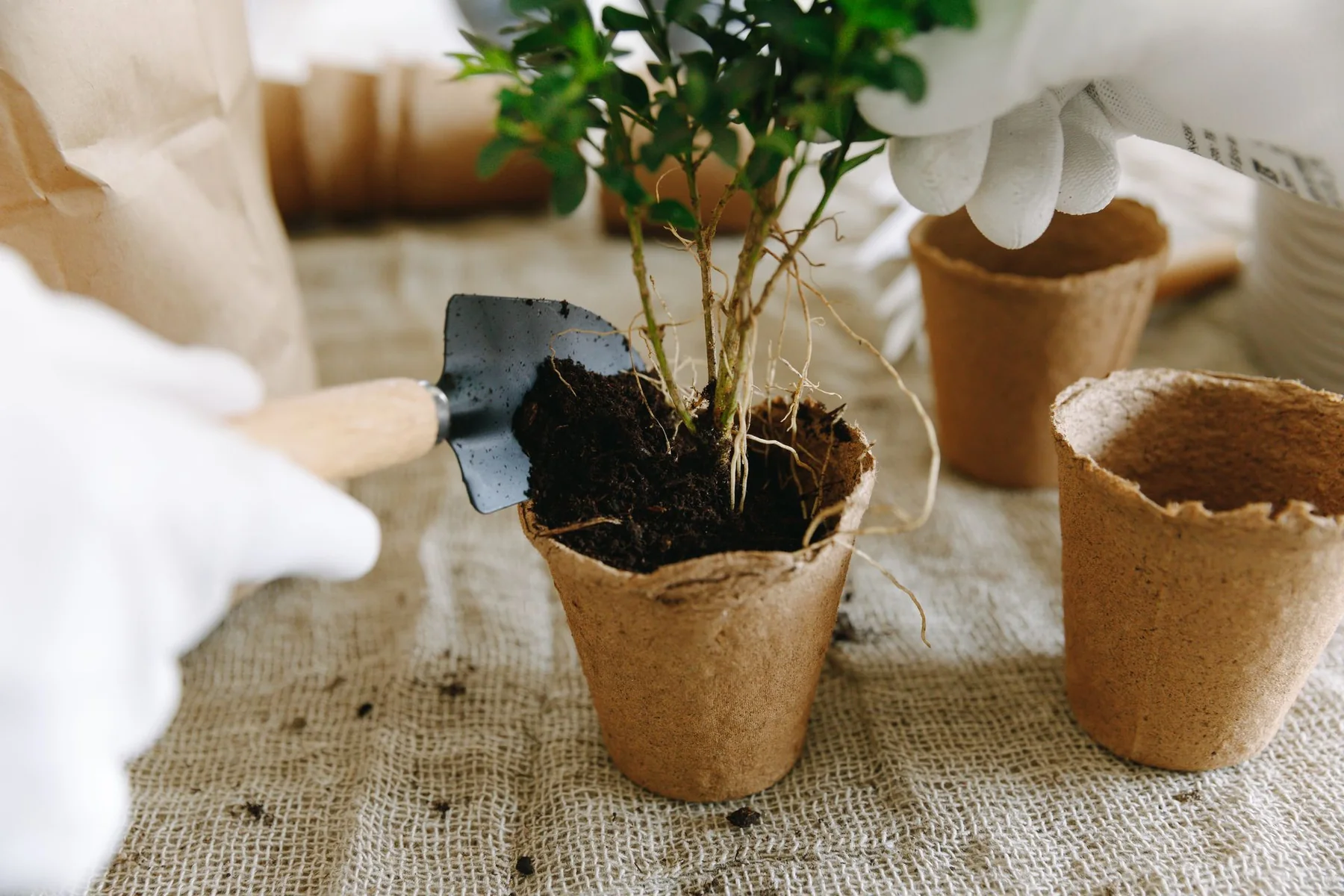
Reusing container mix can save money and reduce waste, but a pot is not a bag of infinitely reusable soil. Roots, watering, fertilizer, disease, and time change the physical and chemical condition of the medium. A better renewal plan begins by asking why the last crop struggled, then deciding whether the mix is a safe base for reuse, needs measured amendment, or should be discarded because a serious plant-health problem is present.
Empty the pot with a diagnosis in mind
Before tipping a container, note what grew in it, what symptoms appeared, and how often the mix dried. A collapsed, sour-smelling medium with standing water points to a different issue than a loose mix that dried every afternoon. Yellow leaves can reflect nutrient shortage, waterlogging, root damage, or pH; they are not a diagnosis by themselves. Photograph the plant and root ball if a disease or pest problem is suspected, and seek a local Extension opinion before recycling that material.
Remove old stems and large roots. Check for hard, compacted clumps, an unpleasant odor, visible insect larvae, and the condition of drainage holes. Healthy roots are not a reason to throw every bit of medium away; a dense root mat is a sign that the container was crowded or the crop ran out of root space. Break the root ball apart outdoors or over a tarp so it does not scatter into neighboring pots.
Do not reuse mix from a plant known to have a soilborne disease, persistent root pests, or a serious unexplained decline. Home pasteurization is difficult to do evenly and can create odor or safety hazards. If disease was likely, bag or dispose of the material according to local waste guidance and clean the container before reuse. Ordinary cold-season storage does not reliably kill every pathogen or pest.
Test before adding nutrients
Potting media can accumulate soluble salts from fertilizer and irrigation water. Finished compost can also raise salts, phosphorus, and pH when added in excess. If the previous crop showed repeated nutrient symptoms or the mix has been amended several times, use a soil or media test that is appropriate for containers. A garden-bed soil test may not use the same interpretation as a greenhouse or container-media test, so check which sample type the laboratory accepts.
Do not respond to every yellow leaf with more compost or a high-phosphorus fertilizer. A nutrient test can show that a container already contains enough of an element; adding more can worsen imbalance or runoff. If the test is unavailable, use a conservative mix from a reputable source, keep a record of what was added, and observe a small test planting before filling every pot with the same batch.
Structure matters as much as nutrients. Reused mix can become fine, compact, and slow to drain as organic materials break down. Compost alone is not a substitute for a potting medium: it holds water and supplies nutrients, but its texture and salt content vary. Use it as one component at a modest rate specified by a reliable container-gardening source, then check how the blended mix wets and drains.
A practical screening and renewal sequence
- Reuse: the previous plant was healthy, the mix has no pest or disease warning, and it remains loose enough to wet and drain.
- Refresh: break apart roots, screen out coarse debris, blend with a fresh container medium or a tested amendment, and label the batch.
- Test first: repeated fertilizer use, unusual salt crusts, recurring deficiency, or excessive compost calls for a media test before adding more inputs.
- Discard: known soilborne disease, root-knot nematodes, persistent root pests, or unexplained severe decline warrants disposal under local guidance.
- Clean the pot: wash off soil and sanitize reusable containers when disease risk is present; follow the crop-specific sanitation recommendation.
- Trial: plant a small, fast-growing crop in the renewed batch and compare it with fresh mix before scaling the recipe.
This is a decision screen, not a recipe that guarantees safe reuse. A pot that held a healthy pepper may be a reasonable candidate; one that held a plant with suspected bacterial wilt is not. Even when reuse is appropriate, the mix may need fresh aerating material and a crop-specific fertilizer plan. Label the container with the batch date and ingredients so you know what “renewed mix” means next spring.
Match the refreshed medium to the next crop
Seedlings need a light, uniform medium with adequate air and moisture; a coarse, partially decomposed batch can make germination uneven. Large fruiting crops need more root volume and a stable water supply than a small herb. Leafy greens tolerate a shallower root zone than a full-size tomato. Reusing the same blend for every crop may be convenient, but container depth, particle size, drainage, and nutrient demand differ.
Wet the renewed mix before planting. Dry peat or other organic components can repel water initially, while a saturated batch can stay airless. Add water gradually and mix, then wait to see whether the medium stays evenly moist without becoming a puddle. If water runs down the sides without wetting the center, rehydrate slowly in stages. If it pools on top, check compaction and holes before planting.
Keep a container history
Write the crop, cultivar, container volume, mix batch, fertilizer, watering pattern, and symptom notes on a card or in a phone note. At the end of the season, one line such as “tomato: healthy, but mix stayed wet after rain” can explain why the next crop needs a different container or site. Compare one renewed pot with one fresh pot using the same crop and watering routine. It is a simple test that makes the next amendment decision more grounded.
When fresh mix is the safer reset
Safe reuse depends on the former crop’s health, pest history, mix ingredients, water quality, and local disposal rules. This guide cannot diagnose disease from a general symptom or recommend a universal compost percentage. Use an Extension soil/media test for fertility questions and a plant clinic for uncertain disease. Do not reuse material from a confirmed regulated plant disease or move it to a community garden without approval.
Sources and further reading
- Too much compost and manure — University of Minnesota Extension
Risks from excess compost, including salts, nutrients, and pH changes.
- Troubleshooting seedling issues — University of Minnesota Extension
Media testing and high-salt issues affecting germination and seedlings.
- Container Vegetable Gardening: Four Keys to Success — Penn State Extension
Container drainage, media structure, crop space, watering, and fertilizer needs.