
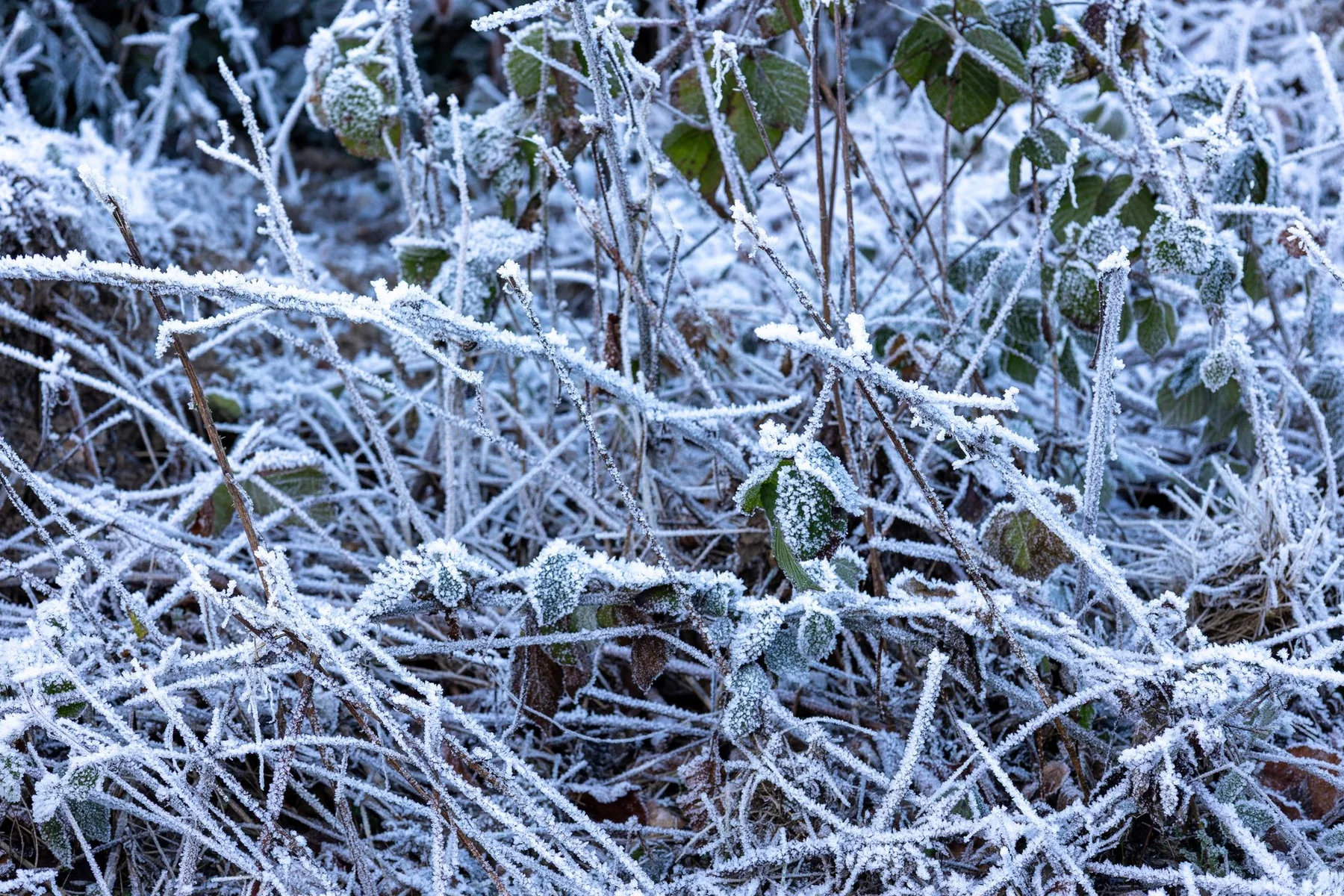
The first frost is a forecast event, not a single universal date. A low area can cool before a nearby hillside, a balcony pot can lose heat faster than garden soil, and a wall can hold warmth for a few hours after sunset. A useful checklist helps a gardener protect what is worth protecting, collect seed that is ready, and avoid rushing every plant indoors at once.
Read the forecast for the garden you have
Check the expected low, wind, cloud cover, and duration of the cold spell. A light frost can damage tender foliage while a harder freeze can affect roots and stored water. The forecast station may be miles away and at a different elevation. Compare its prediction with a sheltered thermometer near the plants over several cold nights, but treat a small sensor as local context rather than an official warning system.
Identify which plants are tender, frost-tolerant, dormant, or already finished. A basil pot and a kale planter need different decisions. Consult a regional Extension list for crop tolerance and the specific cultivar. “Frost tolerant” does not mean that every part of a plant or every stage survives a prolonged freeze.
Check the soil and container before moving anything. A wet pot is heavier; a dry pot can be stressed before the cold arrives. Move only containers that can be lifted safely, and keep them inside the balcony railing or in a protected location where they do not block exits. Ask building management about storage in shared hallways or stairwells.
Prioritize plants by value and vulnerability
Choose a small group to protect: tender herbs you use, a tropical plant you plan to overwinter, a seed crop close to maturity, or a newly transplanted container. Covering every plant can create more work than the crop is worth. Harvest mature produce and seed first. Do not attempt to save a plant with a serious disease simply because it is expensive; bringing it indoors may spread pests to houseplants.
Use a breathable frost cloth or other crop-appropriate cover when local guidance supports it. Keep the material from crushing foliage and secure it against wind. Plastic touching leaves can transfer cold and trap moisture; remove or vent it as temperatures rise. A cover is not a heat source and may not protect a pot through a hard freeze.
Container roots are more exposed than roots in the ground. Group pots near a sheltered wall, insulate the outside if appropriate, and protect drainage so water can still escape. Do not wrap a pot so tightly that it remains wet or blocks the drainage holes. If a plant is hardy in the ground but marginal in a container, use an Extension guide for overwintering container perennials.
A short first-frost sequence
- Before sunset: harvest mature produce and bring in frost-sensitive pots that can be moved safely.
- At dusk: cover tender crops with a breathable material that reaches the ground or pot rim.
- After sunrise: remove or vent the cover when temperatures rise to avoid trapping heat.
- Next day: inspect leaves, stems, soil moisture, and container drainage before watering.
- For seed crops: collect only mature dry seed; protect or finish drying seed that is close but not ready.
- For rain systems: empty hoses and barrels before a freeze according to their instructions.
Do not rush seed or tropical plants
Seed heads that are still green may not become viable just because they are dried indoors. Check the crop’s maturity cue and save only seed that is sufficiently developed. If a frost threatens a mature seed stalk, cut it into a labeled paper bag and finish drying it under cover only when the seed is close to maturity. Record that it was brought in early.
Move tropical plants before their sensitive temperature threshold, not only on the night a frost is forecast. Inspect leaves and pot rims for insects, then isolate the plant indoors. Penn State’s tropical-plant guidance notes that many tropicals begin struggling when nights reach the low 40s; the specific species may be more sensitive. Follow the plant’s own guidance and the local forecast.
Review damage without overreacting
Wait until the plant thaws before pruning frost-damaged leaves. The damaged tissue may help protect lower growth during another cold night. Photograph the plant and note the temperature and cover used. If stems remain firm and buds are alive, local Extension advice can help decide whether to wait or cut back. Do not apply fertilizer immediately; a stressed plant may not use it.
Plan the next cold event
Store covers dry, keep a list of pots that cannot be moved, and decide whether those plants should be replaced with hardier varieties next year. Mark the date and actual site temperature in the garden log. Repeated local observations improve the checklist more than a calendar date copied from a different region.
Make the list before a cold alert, while there is time to choose a safe location. Mark each pot as movable, cover-only, or already finished, and note whether it blocks a door or drain when relocated. A quick inventory also shows which plants need a second person or a hand truck, so a forecast does not trigger a rushed lift.
Use the first cold night to improve next year's list
Frost and freeze outcomes vary by species, cultivar, elevation, exposure, and duration. This checklist is not a substitute for a local forecast or crop-specific Extension information. Follow fire, building, and balcony safety rules, and do not use heaters or open flames around covers or indoor plants.
Sources and further reading
- Fall Garden Tasks — Penn State Extension
Regional fall garden tasks, disease cleanup, habitat, and overwintering considerations.
- Tropical Plants to Overwinter — Penn State Extension
Temperature-sensitive tropical pots and bringing them indoors before frost.