
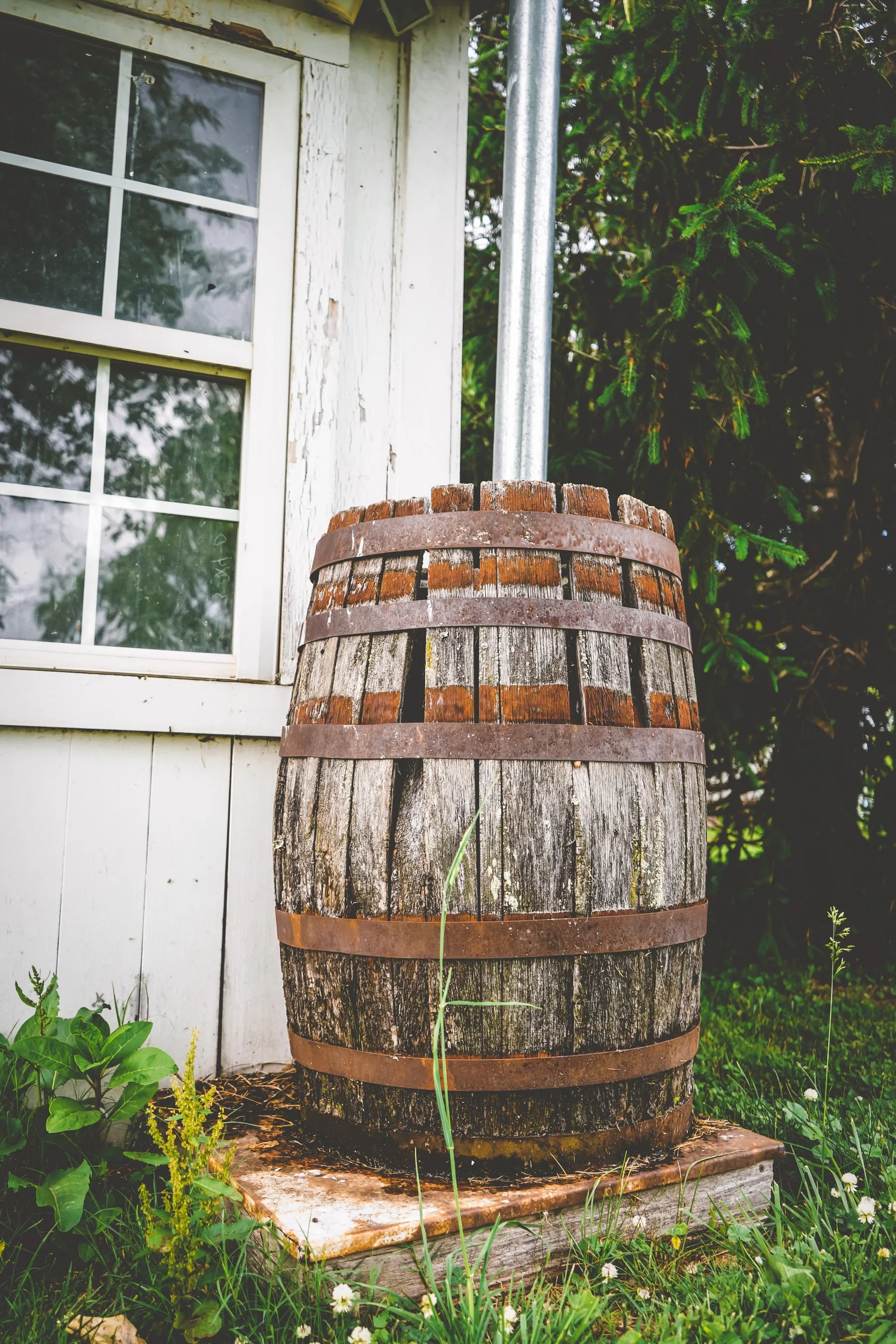
A rain barrel solves one water problem and creates a winter one: the storage vessel must be empty before its contents freeze. The October job is not simply to put a lid on the barrel. It is to drain the tank, clear material that could clog the outlet, remove vulnerable fittings, and keep roof runoff moving away from the building while the barrel is disconnected.
Choose a shutdown date from the forecast and your plumbing
Do not wait for a hard freeze warning if a barrel is already full and nights are trending below freezing. Local microclimates differ: a barrel against a sunny wall may cool differently from one in a shaded, windy alley, but that is not a reliable reason to leave water inside. Check your local forecast, the manufacturer’s winter instructions, and the layout of your downspout. A connected diverter can send roof water into a closed barrel unless it is switched to bypass or removed.
Before opening valves, plan where the water will go. Direct it onto a permeable garden area only if that space can absorb it without flooding a neighbor, eroding soil, or sending water toward a foundation or public path. Keep discharge away from basement windows, retaining walls, and building footings. If your site cannot safely absorb the volume, use a permitted drain route or consult the property manager about an appropriate outlet.
Rain-barrel water is nonpotable. It may contain roof debris, bird droppings, and microorganisms, so do not drink it or use it to wash edible produce. Use it only for purposes allowed by local guidance and the barrel’s instructions. This is especially important when cleaning: gloves, splash control, and handwashing are sensible, and cleaning water should not be poured into a storm drain if local rules prohibit it.
Drain, inspect, and clean
Open the outlet and let the tank empty completely. A barrel raised on a stable platform may drain more thoroughly and can make it easier to fill a watering can during the growing season, but do not climb or tip a full barrel to force water out. If a small amount remains below the spigot, follow the manufacturer’s method for emptying it. Avoid lifting a heavy barrel; stored water weighs roughly eight pounds per gallon.
Once empty, remove leaves, roof grit, and sediment from the interior. Minnesota Extension recommends scrubbing with water and detergent and rinsing with clean water. Use a long-handled brush and keep your face away from the opening. Do not mix cleaning products. If you use a disinfectant because the manufacturer or local health guidance calls for it, follow that specific label and never combine bleach with ammonia or acids.
Inspect the barrel for cracks, a damaged lid, loose insect screen, leaking spigot, or a diverter that no longer seats properly. Photograph any defect and check the warranty before attempting a repair. A cracked barrel should not be left full over winter or placed where a failure would send water onto a foundation or a neighbor’s property.
A sequence for the last warm day
- Switch the downspout diverter to bypass the barrel, or disconnect it according to the model instructions.
- Drain the barrel completely and direct the water to a safe, permeable location.
- Remove leaves and sediment; scrub and rinse the interior.
- Detach the hose, screen, and other fittings that can trap water; dry them and store them indoors.
- Store the clean, empty barrel upside down or under a secure cover, following its material and manufacturer guidance.
- Attach a temporary downspout extension so rain and snowmelt move away from the foundation.
The bypass step deserves a final check after the barrel is moved. Pour a small amount of water into the gutter or wait for rain and watch the path. If water still enters the barrel, the diverter is misaligned or a fitting remains connected. If runoff now splashes against the house, add a safe extension or route it to an approved drainage area.
Protect the rest of the system
Hoses and spigots can hold small pockets of water that expand when frozen. Disconnect and drain them, then store them where they will not kink. Clean the screen so dried leaves do not block it next spring. If your barrel is attached to an irrigation line, drain that line too; a barrel can be empty while a low section of tubing remains full.
Do not seal a wet, dirty barrel and assume it is ready. Remaining organic material can encourage odors and algae, and a trapped puddle may freeze. A breathable cover or the manufacturer’s recommended storage position can keep debris out while allowing the container to dry. Secure the barrel against wind if it is light or exposed; an overturned barrel can become a hazard.
Restart with a small inspection
In spring, inspect the tank before connecting the roof. Clean the screen and gutter, verify the overflow route, and check that water cannot back up near the roofline. Watch the first rainfall for leaks and overflow behavior. Keep the barrel’s nonpotable label visible if other household members might mistake it for a drinking-water container.
Restart after checking the screen and overflow
The sequence follows Minnesota Extension and general freeze-protection principles. Barrel materials, diverters, roof surfaces, water-use restrictions, and stormwater rules vary. Use the manufacturer’s instructions for the specific model and local drainage rules for the property. This guide does not establish whether collected water is safe for a particular crop or use.
Sources and further reading
- Rain barrels in the home landscape — University of Minnesota Extension
Fall draining, cleaning, storage, overflow routing, and nonpotable limits for rain-barrel water.
- Rain Barrels Turn Rainwater into a Backyard Resource — Penn State Extension
Rain-barrel use as nonpotable outdoor water and stormwater context.