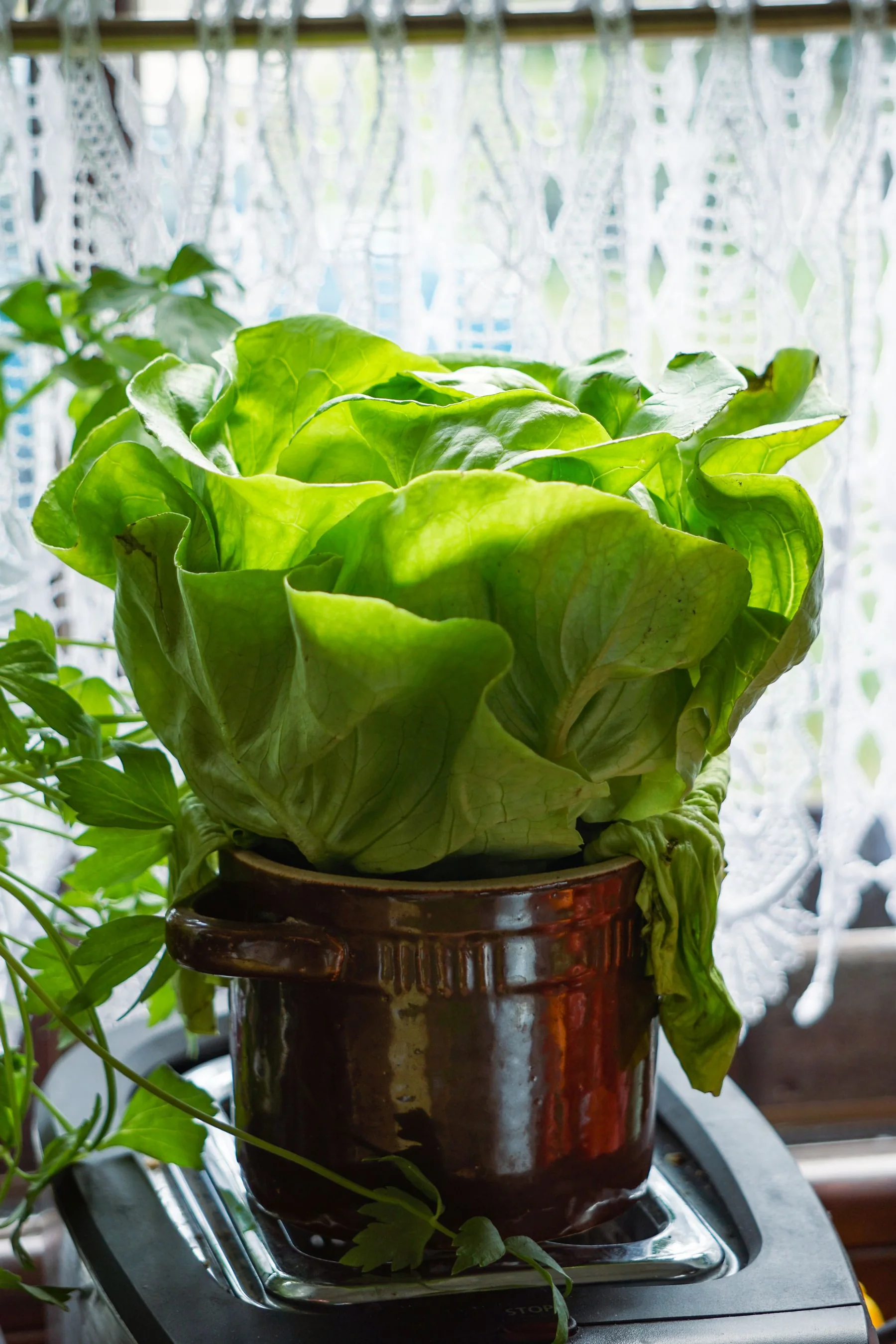
Shallow containers can grow tender greens, but the small root zone makes water and temperature change quickly. A tray that supports baby lettuce may be too shallow for a full-size crop or a long summer harvest. Choose a harvest stage first, then match the container depth, drainage, and sowing density to that goal instead of treating every leafy crop as a miniature version of a garden bed.
Choose greens for the depth you have
Leaf lettuce, baby spinach, arugula, and some mustard greens can be harvested young from relatively shallow root space when the container mix, water, and light are suitable. A mature head lettuce or a long-lived chard plant needs more room. Seed packets may not specify a shallow-container method, so use local Extension guidance and start with a short row or tray rather than filling the entire balcony.
Measure usable depth after allowing room for drainage and a little headspace. A tray only a few inches deep can dry quickly and may not support a large root system. Containers need open drainage holes; do not create a sealed dish and rely on gravel to solve it. Put a catch tray underneath if needed, then empty it after watering so roots are not sitting in standing water.
Use a potting mix that drains while holding enough moisture for small seedlings. Garden soil can compact in a shallow box and reduce air space. Pre-moisten dry mix gradually before sowing so tiny seed does not float into one corner. Fill evenly and firm lightly; pressing the surface too hard can form a crust that blocks emergence.
Sow densely only for a planned harvest
For baby leaves, sow according to the packet’s spacing or use a crop-specific microgreen/leaf-cutting method. Dense sowing can produce a quick cut but raises humidity and makes airflow poor. Thin seedlings if leaves touch and stay wet. For larger leaves, space plants enough for their mature size. A tray sown thickly may look productive while roots compete for the limited volume.
Label each sowing with crop, variety, date, and intended harvest stage. Succession sow small portions when you can use them, rather than planting a whole packet at once. If the first batch germinates poorly, record the seed lot and test conditions before increasing density. A paper test can help distinguish old seed from a too-dry tray.
Keep moisture steady without waterlogging
- At sowing: wet the mix evenly, then sow at the crop’s recommended depth.
- During emergence: mist or water gently so seed does not wash away; protect from drying wind.
- After true leaves appear: check below the surface and water thoroughly when the root zone begins to dry.
- After rain: empty the catch tray and confirm the drainage holes are open.
- During heat: move the tray from extreme afternoon exposure and check moisture more often.
- Before harvest: water the soil, not the foliage, to reduce unnecessary leaf wetness.
Shallow trays can need more frequent checks than deep pots, but daily watering is not automatically correct. Shade, wind, mix, and container material change drying. A water wick may help, but only if it keeps the mix moist without saturating it. Feel the medium and observe the leaves. Wilt can signal dry roots or root oxygen stress; inspect before adding water.
Manage light and temperature by season
Leafy greens often prefer cooler conditions than summer fruit crops. A shallow dark tray on concrete can heat rapidly, while a north-facing courtyard may keep the mix cool and wet. Place a thermometer near the leaves during a hot spell and use crop guidance to decide whether to shade, relocate, or pause sowing. A row cover can protect from pests and cold, but it may trap heat when sun returns.
In a windowsill tray, light can be weaker than outdoors and seedlings may stretch. Map the window across the day and use a timer-controlled grow light if needed. In a winter indoor garden, keep foliage away from cold glass and heating vents. Do not assume indoor temperature equals root-zone temperature.
Harvest for regrowth, not exhaustion
Use clean scissors and leave the growing point when the crop tolerates cut-and-come-again harvest. Remove outer leaves first and avoid cutting every plant to the soil line unless the method calls for it. Rinse harvested greens under clean running water; rain-barrel water is not an appropriate produce wash. If leaves show disease or an unusual residue, do not eat them until the source is identified.
Compare a shallow tray with a deeper pot
Grow the same variety in two container depths with similar light and mix. Record emergence, moisture checks, leaf size, and harvest date. The comparison can tell you whether the shallow tray is suitable for repeated cuts or only a quick baby-leaf harvest. It is a household test, not a claim about all varieties or climates.
Weigh or count each harvest from the two containers and record how many days passed between cuts. Keep the scissors clean and use the same cutting height for both groups when the crop permits it. If one tray loses quality sooner, note whether the leaves were older, the mix dried faster, or the container overheated before changing the seed spacing.
Choose a deeper pot for a longer harvest
Crop depth, spacing, heat tolerance, and harvest method vary. Use the packet and a regional container guide for the species. This article does not establish that every green can grow at every depth, and it does not offer a food-safety procedure for irrigation water or disease diagnosis.
Sources and further reading
- Container Vegetable Gardening: Four Keys to Success — Penn State Extension
Container selection, mix, leafy crop suitability, drainage, and watering.
- The ABCs of Microgreens — Penn State Extension
Seed quality and density planning for small-scale edible greens.
- Selecting and Serving Produce Safely
FDA recommends washing all produce, including home-grown produce, under running water; do not use rain-barrel water to wash harvested greens.