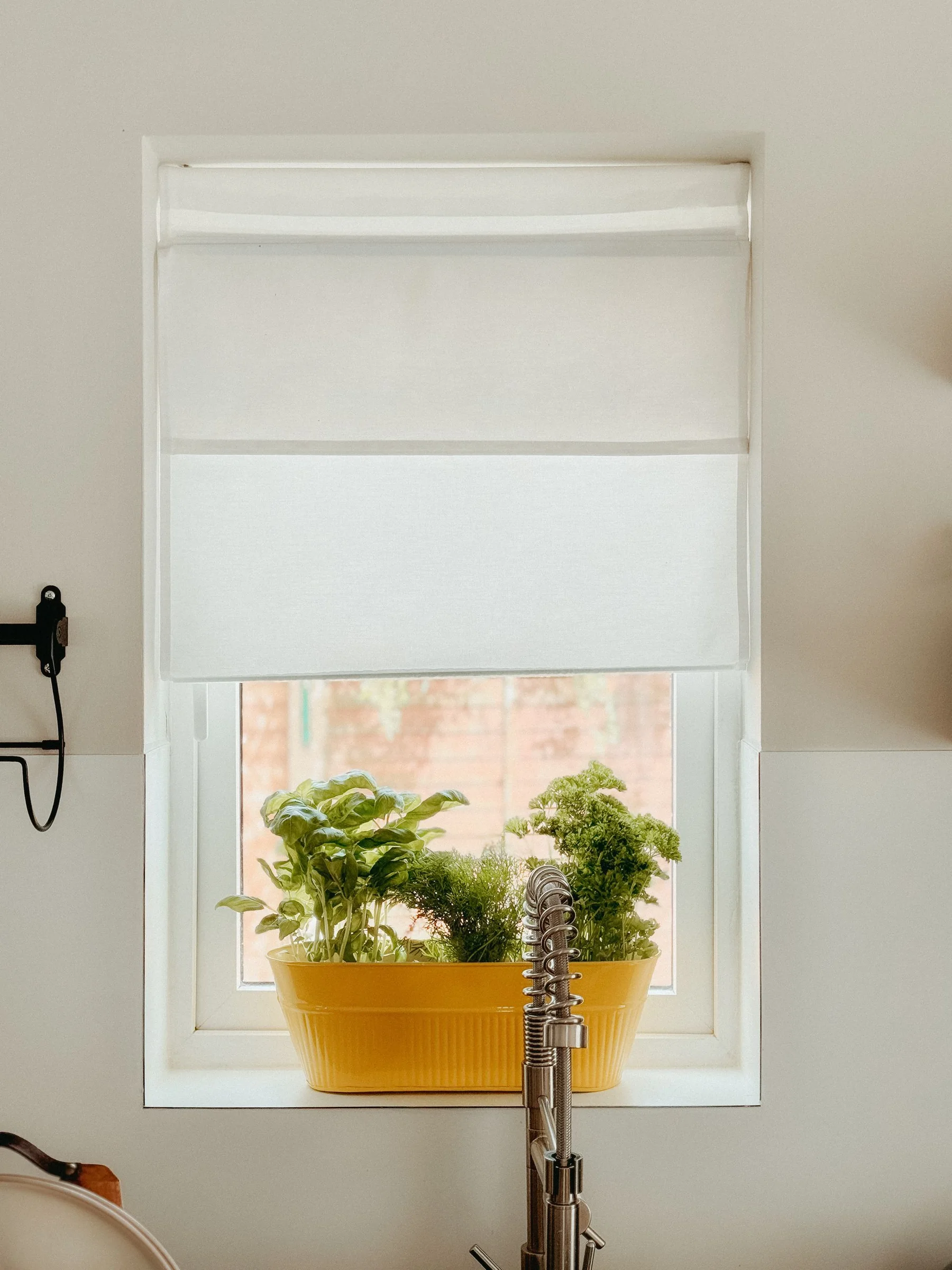
Keeping herbs on a windowsill can create the impression of a self-contained seed cycle: sow a pinch, harvest leaves, wait for flowers, and save what follows. In practice, indoor light, plant age, pollination, and the kitchen’s temperature determine whether that cycle closes. A windowsill can be a good place to maintain a few herbs, but it may be too dim for strong growth or too cramped for flowering and seed collection.
Choose a species that fits the light and the timeline
Start with the herb’s life cycle. Basil, cilantro, parsley, dill, and thyme do not all behave the same way, and a plant bought as a small pot may already be near its natural flowering stage. Some herbs are annual or biennial in the way gardeners grow them; others are perennial subshrubs. Decide whether the goal is fresh leaves, a mother plant, or seed. Each goal changes how much light and space the plant needs.
Measure the window before buying another plant. Note its direction, the hours when direct sun touches the leaves, and whether a building or tree blocks the sky. A bright-looking room may still provide weak light at the leaf surface. University of Minnesota Extension recommends substantial daily supplemental light for seedlings; its broader indoor-plant guidance describes different hour targets by plant group. Treat those numbers as a starting point for the species, then watch the growth rather than assuming a kitchen window is bright enough.
Look for a compact, healthy plant with no insects or yellowing at the base. If starting from seed, use a clean tray with drainage and a seed-starting medium, then transplant when the plant has roots and leaves appropriate to the species. A large garden pot does not automatically improve a seedling; excess wet mix can stay cold and slow. Begin with a pot that gives roots room while still drying at a predictable pace.
Keep leaf production separate from seed production
For leaf harvest, pinch or cut above a pair of healthy leaves where the species responds well to branching. Do not remove so much foliage that the plant cannot replace it. Harvest basil before it becomes a tangle of flower spikes if the objective is tender leaves. If you want seed, allow selected stems to flower and mature instead of continually pruning every bud. One plant can serve both roles if you leave a portion of it to complete flowering.
Indoor flowering does not guarantee seed. Oregon State Extension notes that cilantro forms coriander seed near the end of its life cycle; other herbs differ, so use crop-specific pollination and maturity guidance rather than assuming that every indoor flower will set viable seed. If seed set matters, record the herb variety, flowering conditions, and whether insects or hand pollination were involved.
Keep a second plant or a cutting as a backup if the first is important. Clonal propagation preserves the same plant more directly than saved seed, while seed may create variation or may not form at all. Label a cutting with the parent plant and date. This lets a home grower preserve a favorite herb without claiming that every descendant grown from its seed will be identical.
A windowsill routine with observable checks
- Light: measure direct-sun hours and check whether stems lean toward the glass; rotate the pot if growth is uneven.
- Water: feel the mix below the surface and empty the saucer; do not water by a fixed weekday alone.
- Growth: record new leaves, stem length, and any pale or stretched growth that can signal insufficient light.
- Harvest: remove only the amount the plant can replace; reserve one branch if seed is the goal.
- Pests: inspect leaf undersides and new growth weekly, especially after bringing an outdoor pot inside.
- Seed: collect only mature, dry seed from an identified plant and keep it separate from purchased seed.
Avoid the common indoor stress cycle
A pot on a cold pane can chill roots at night while midday sun heats the leaves. Move the plant back from the glass during cold spells, but do not place it over a radiator. Warm dry air can increase water loss and encourage mites. A tray of pebbles may raise humidity only slightly around the foliage; it does not replace adequate room conditions or airflow. Check the actual leaves and soil rather than applying a household humidity trick without measurement.
Container drainage is essential. Use a pot with open drainage holes, a saucer that can be emptied, and a medium formulated for containers. Do not add gravel at the bottom to “improve” drainage; the boundary between fine mix and coarse material can leave water sitting higher in the pot. If water drains slowly, inspect blocked holes and compacted mix before adding a new layer.
If a plant flowers early and becomes leggy, decide whether to replace it with a young sowing or keep it for seed. There is no need to treat flowering as failure if the objective includes a seed harvest. Conversely, allowing every herb to set seed may reduce leaf quality and crowd the sill. Choose one plant for the cycle and keep the rest in a leaf-harvest routine.
Close the loop with a seasonal note
Record the seed packet date, window orientation, supplemental-light hours, and the date the plant began flowering. Note which leaves were harvested and whether the seed matured indoors. Next season, change one variable—perhaps sow earlier, add a timer-controlled light, or move the pot to a brighter window. That simple record is more useful than a generic promise that herbs grow well anywhere indoors.
Do not save seed from a stressed indoor plant
Indoor results vary by herb species, cultivar, window exposure, building shade, and heating conditions. The linked Extension sources address Minnesota and general indoor seedling needs; use local or species-specific advice for unusual herbs and pollination requirements. This article covers household culinary herbs in pots and does not provide a complete seed-production protocol for every species.
Sources and further reading
- Growing herbs — University of Minnesota Extension
Herb light, container, watering, and indoor growing basics.
- Lighting for indoor plants and starting seeds — University of Minnesota Extension
Seedling and indoor-plant light duration, intensity, and signs of low or excessive light.
- Cilantro — Oregon State University Extension Service
Cilantro’s life-cycle transition from leafy growth to flowering and coriander seed.
- Seed Saving Basics — Penn State Extension
Crop-specific pollination, seed maturity, and limits when saving seed from home-grown plants.