
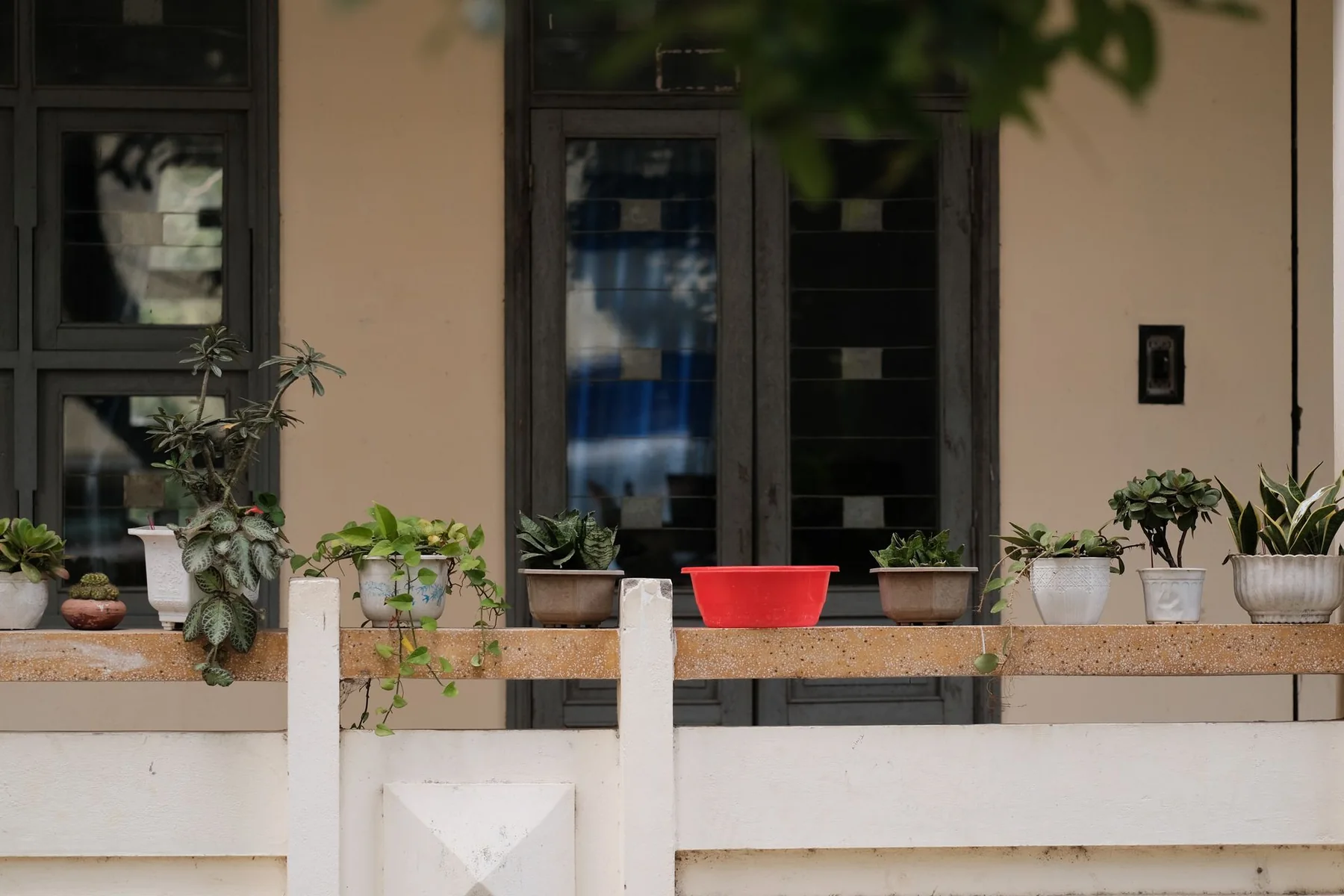
A balcony’s weather can differ from the nearest airport station by a surprising amount. Sun reflected from glass, wind funneled between buildings, a concrete wall that releases heat after sunset, and a roof overhang all shape the conditions a pot experiences. “Full sun” on a plant label does not tell you how much light reaches a particular balcony. A short observation map can prevent buying plants that the site cannot support.
Observe light at leaf height
Mark the balcony floor or railing in a simple sketch and note where direct sun falls at several times: morning, midday, late afternoon. Repeat on a clear day and a cloudy day if possible. A window or railing can cast moving shade, and neighboring towers may block light at the exact time a crop needs it. Record direct sun separately from bright reflected light; they are not equivalent for every crop.
Use the plant’s height as part of the measurement. A low herb pot may sit in shade while a trellised bean receives sun above it. A hanging basket may be exposed to a brighter, windier layer. If you add shelves, note how the upper tier shades the lower one. The layout of containers changes the light map as the garden grows.
For a seedling or fruiting crop, compare the measured hours with a reliable source for that species and cultivar. The general rule that vegetables need “six hours” is a rough planning point; crops differ and heat can change the value of full sun. If a plant stretches toward the glass, pale new growth or delayed flowering may indicate inadequate light, though nutrient and root issues can also cause weak growth.
Read wind and heat before raising a trellis
Wind can dry a small container quickly, break a stem, or topple a top-heavy pot. Watch the site on a gusty day and note turbulence near corners and open railings. A building can shield a balcony from one direction and accelerate airflow from another. Do not attach a tall support to a railing unless the building allows it and the attachment is secure.
Hard surfaces and dark containers absorb heat. A west-facing wall may become hot late in the day, while an east-facing balcony offers gentler morning sun. Place a simple thermometer in shade at plant height and compare it with the local weather report; a single reading is not a climate study, but repeated checks can flag a hot pocket. Avoid leaving a temperature sensor against glass, where it measures the surface rather than the air.
Container material adds another variable. Porous terracotta may dry faster than plastic; dark pots can heat differently from pale ones; a small pot changes temperature more quickly than a large volume of mix. Group pots according to water needs and test a new location with one container before moving an entire collection. A plant can thrive after a move because of better light and fail because the same spot becomes too hot at 4 p.m.
Build a one-week site map
- Day 1: sketch walls, overhangs, windows, rails, doors, and safe walking space.
- Days 2–3: record direct-sun start and stop times for each potential pot location.
- Day 4: watch wind direction and note where lightweight leaves flutter or dry.
- Day 5: take a shaded temperature reading at plant height during the warmest period.
- Day 6: check soil moisture in one small and one large pot at the same time.
- Day 7: compare the observations with species needs and choose one low-risk trial plant.
The point is not to create a complex weather station. A pencil, phone photo, and short notes can reveal whether the brightest spot is also the windiest, whether rain reaches the pots, or whether a railing blocks lower leaves. Keep the map after plants are installed and update it as seasons change; sun angles shift through the year.
Choose plants by the limiting condition
If light is scarce, select leafy crops or herbs whose local guidance tolerates partial shade instead of trying to force a sun-loving fruiting crop. If wind is the main problem, use lower, sturdier plants and secure supports. If heat is intense, choose heat-tolerant varieties, shade a container at the hottest hours, or move it away from reflective surfaces. Do not “solve” one issue by introducing another, such as enclosing a balcony so tightly that airflow disappears.
Vertical growing can improve access to light, but it also increases leverage and wind load. A trellis full of foliage acts like a sail. Use a structure designed for the container and balcony rules, anchor it to an approved point, and keep it below unsafe heights. Check the support after storms and remove a crop if the structure begins to flex.
Keep site evidence with the plant record
Write down where the pot stood, the direct-sun interval, container size, watering frequency, and the plant’s response. If a tomato sets fruit poorly, do not blame shade alone; high temperature, pollination, and water stress may contribute. Move one variable at a time and compare with a second plant only when the conditions are similar. A personal map is a useful decision aid, not a substitute for plant-specific Extension advice.
Repeat observations at the same balcony points
Microclimates change with season, building orientation, nearby construction, and container placement. A week of observations cannot predict unusual heat, freeze, or storm events. Follow balcony weight, railing, fire, and water rules. Use local Extension guidance for crop light requirements and do not assume that results on one building apply across a city.
Sources and further reading
- Lighting for indoor plants and starting seeds — University of Minnesota Extension
Measuring light quality and duration and matching plants to available light.
- Container Vegetable Gardening: Four Keys to Success — Penn State Extension
Container material, size, crop support, sun, water, and balcony-scale constraints.