
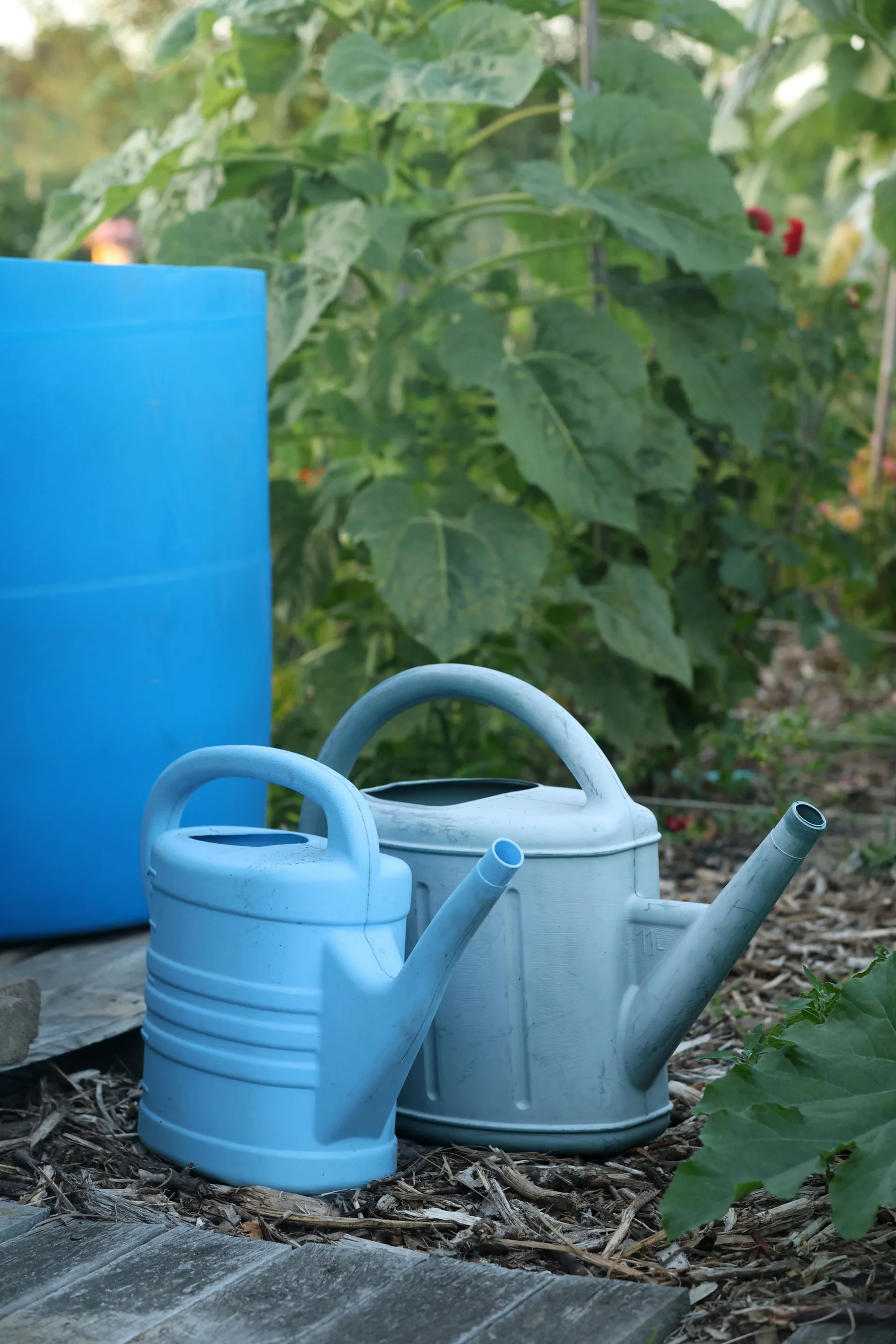
Rainwater harvesting can reduce runoff and provide water for ornamental containers, yet a small rain barrel is not an automatic solution to drought or water restrictions. The roof, barrel, intended use, overflow route, local rules, and household demand all matter. A thoughtful setup captures a limited amount, labels it clearly, and keeps the water away from uses that require potable quality.
Know what is on the roof and in the water
Water collected from a roof can carry dust, bird droppings, pollen, leaves, roofing material, and microbes. A barrel does not disinfect it. Minnesota Extension treats rain-barrel water as nonpotable and says it should not touch the edible portion of a plant. It allows hand-watering some tall crops and fruit trees only when the water can be kept off edible parts. For a small home garden, ornamental plants are the simplest default; follow local public-health guidance for other uses.
Before connecting a barrel, identify the roof surface and gutter. Some materials or coatings can leach contaminants. If the roof is old or its composition is unknown, check with local health or Extension authorities before using collected water on edible plants or around children and pets. A screen can keep leaves and mosquitoes out, but it cannot remove dissolved chemicals or microorganisms.
Use stored rainwater for appropriate ornamental plantings and follow local rules. If a drought ordinance restricts capture or outdoor watering, those rules apply even to a private barrel. Water-rights laws vary across states and municipalities; do not rely on a general online article to answer whether a particular capture setup is lawful. Check the local government or utility before installing a large cistern, connecting to plumbing, or changing a downspout.
Size the barrel to the task
Estimate demand before buying equipment. A few patio pots may need a watering can’s worth of water; a full vegetable plot may empty a small barrel quickly. A barrel collects water only when rain falls and may overflow during storms. If the roof area is large, the barrel can fill faster than the garden uses it. An overflow path is therefore part of the design, not an optional accessory.
Place the barrel on a stable, level base designed for its filled weight. Water weighs about 8.3 pounds per gallon, before the container itself is counted. A full 55-gallon barrel therefore weighs more than 450 pounds. On a balcony, deck, roof, or elevated platform, follow building load guidance and get approval before installation. Keep the barrel from blocking an exit, drain, or accessible route.
Fit a screened inlet, secure lid, overflow outlet, and accessible spigot. Direct overflow away from foundations and neighbors. A disconnected downspout still needs an extension or splash block that routes runoff to a safe permeable location. Observe the first rain after installation to make sure water does not pond beside a building or wash soil onto a sidewalk.
Use stored water with clear boundaries
- Label it nonpotable: keep the mark visible to anyone who may use the hose or watering can.
- Choose an appropriate use: favor ornamental landscape watering and verify edible-crop rules locally.
- Keep the system closed: screen the inlet and use a secure lid to limit debris, animals, and mosquito access.
- Avoid contact with food: do not wash produce or use the water for drinking, cooking, or handwashing.
- Watch the overflow: keep discharge away from building foundations, sidewalks, and neighboring properties.
- Maintain the barrel: remove debris and clean it before odors or clogs develop.
Use a dedicated watering can or hose for barrel water and do not bring it into the kitchen. If you water ornamentals close to edible beds, direct the stream onto soil and avoid splashing onto leaves. That does not make the water sterile; it simply limits unnecessary contact. Wash hands after maintenance and do not let children play in a barrel or its outlet.
Treat drought as a demand problem too
Harvesting can complement efficient watering, but it cannot offset a poorly matched garden. Group pots with similar water needs, use containers large enough to avoid constant drying, and choose plants suited to local rainfall and heat. Mulch can reduce evaporation in many settings, though in small pots it can also conceal a surface that is already too wet. Check moisture before watering and prioritize plants that are still establishing or visibly stressed.
During a restriction, follow the schedule and allowed uses set by the local authority. A rain barrel does not exempt a homeowner from watering restrictions if the rule applies to all outdoor water. If there is no restriction, use rainwater only when it is available and keep a backup plan for dry weeks. A barrel is storage, not an infinite source.
Review after storms and between seasons
Inspect screens, fittings, overflow routes, and the base after strong rain or wind. Remove sediment and leaves when flow slows. In cold climates, drain and clean the barrel before freezing; the stored water can expand and crack the container. Remove and store hoses and screens if the manufacturer recommends it, then extend the downspout away from the building for winter runoff.
Check local water rules before connecting a downspout
Roof materials, public-health recommendations, drought rules, water-capture laws, stormwater codes, and building load limits vary. The Minnesota Extension source linked below is useful for barrel operation, but it does not establish local legal permission elsewhere. Confirm the roof and intended use with local authorities before applying collected water to edible plants or installing a system on an elevated structure.
Sources and further reading
- Rain barrels in the home landscape — University of Minnesota Extension
Nonpotable limits, cleaning, overflow, and appropriate uses of rain-barrel water.
- Rain Barrels Turn Rainwater into a Backyard Resource — Penn State Extension
Collected rainwater is untreated and should not be used for drinking or household potable purposes.