
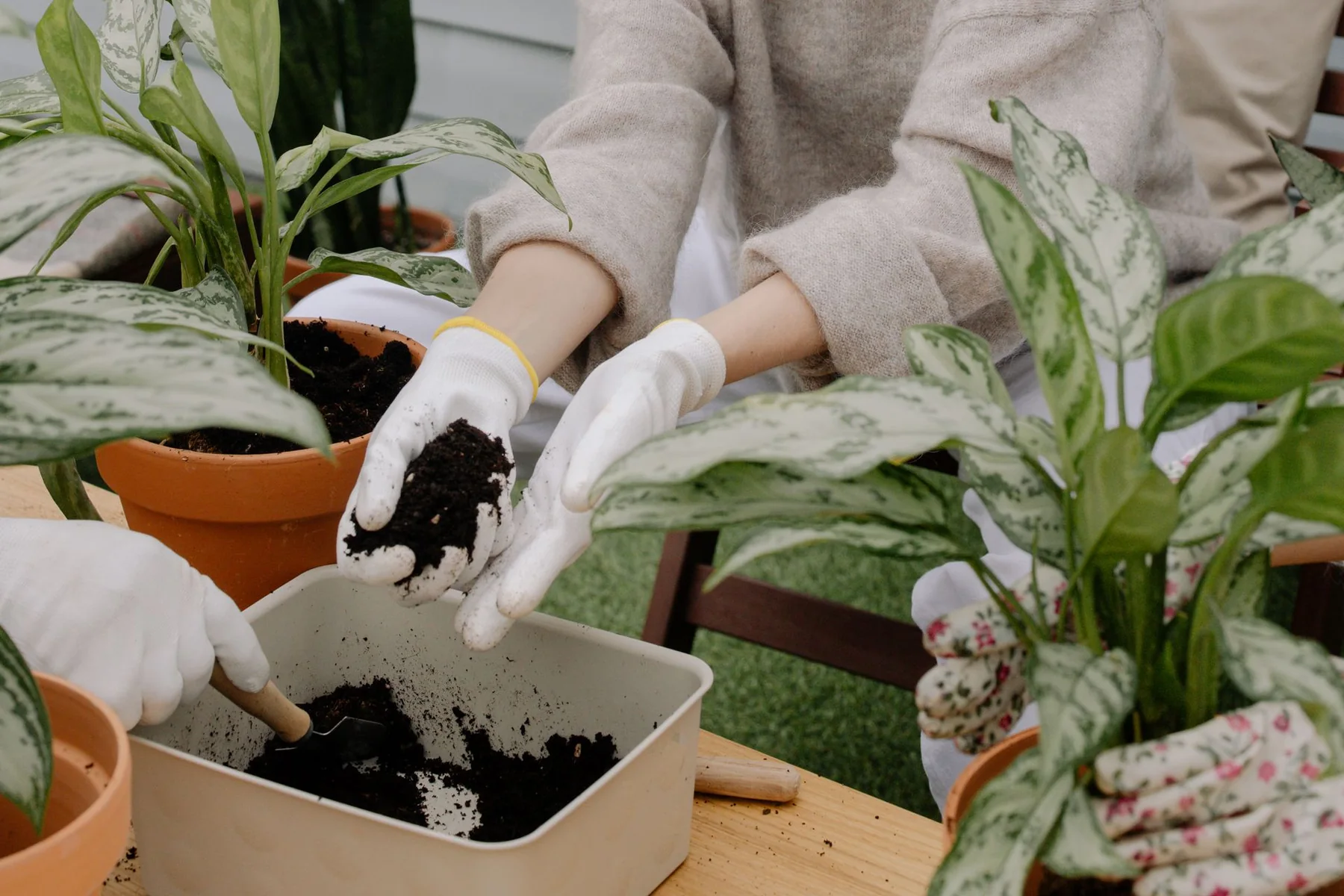
Reusing potting mix can be reasonable when the previous crop was healthy and the material still drains, but the first decision is about risk, not economy. A pot that held a healthy basil plant is different from one that held a tomato with unexplained wilt or a root-knot nematode problem. Cleaning the pot and screening the mix cannot make every disease or pest disappear.
Decide whether the old mix belongs in the next pot
Start with the previous plant’s health record. Reuse is more plausible when the plant grew normally and no serious soilborne disease or root pest was suspected. Do not reuse mix from a plant with confirmed bacterial wilt, root rot, nematodes, or another persistent problem unless a crop-specific Extension source describes an effective treatment. Cold winter storage is not a reliable sanitation step.
Lift the root ball and inspect it before shaking the pot empty. Note soft roots, galls, larvae, webbing, mold, and unusual odor. Root symptoms can be caused by overwatering as well as pathogens, so a photograph and diagnosis are more useful than a guess. If the symptoms are unclear, keep the material separate while you ask a local plant clinic. Do not carry questionable mix to a community garden.
Consider what the next plant will be. A crop in the same family may be more vulnerable to the previous crop’s pest or disease. A seedling tray has less root volume and can be more sensitive to high salts than a mature ornamental. If the next crop is valuable or time-sensitive, fresh medium can be a safer and more predictable choice even when reuse might be possible.
Clean the container before filling it again
Remove all roots and soil from the pot, then wash it with soap and water. Clean the drainage holes and underside where algae or insect eggs can remain. If the previous crop had a disease concern, follow the specific Extension sanitation protocol for that pathogen and container material. Do not mix household cleaners or use an unlabelled disinfectant around edible plants.
Dry the pot completely before storage. Porous clay can retain salts and organic residue; plastic can hold algae around seams. Inspect for cracks that might leak or break under wet soil. Replace a damaged saucer or reservoir rather than trusting it to contain water on a balcony floor.
Separate used mix from fresh mix on a clean tarp. Do not dump it into a seed-starting tray or a bag of fresh medium. If the mix has visible pests or disease, seal and dispose according to local rules. Avoid making airborne dust when the material is dry; dampen it lightly before handling if the source is known and safe.
A reuse decision sequence
- Known healthy crop: remove roots, inspect texture, and decide whether the next crop can tolerate the existing medium.
- Unknown symptoms: isolate the pot and seek a diagnosis before moving the mix to other plants.
- Confirmed soilborne problem: discard or treat only under a crop-specific Extension protocol; do not rely on cold weather or sieving.
- High salt or repeated fertilizer: use an appropriate media test or replace the mix before sensitive seedlings.
- Sound medium: blend with fresh container mix only if the texture and crop need support it; label the blend.
- New crop: monitor roots, drainage, and growth separately so any problem can be traced.
Do not treat home heating as automatic sterilization
Gardeners sometimes recommend baking used potting soil in an oven or microwaving it. Household heating can produce strong odors, uneven temperatures, and indoor air concerns; it may also fail to reach an effective temperature throughout the material. Do not use this method without a specific Extension protocol and suitable equipment. Steam or commercial media treatment may be available to professional growers, but a household kitchen is not a calibrated pasteurization chamber.
Solarization and freezing have similar limits: effectiveness depends on temperature, time, depth, moisture, and the target organism. A sunny day on a balcony does not prove that the entire container reached a lethal temperature. If the risk is significant, replacing the medium is often simpler and safer than attempting a treatment that cannot be verified.
If reuse is appropriate, restore structure cautiously
Old mix may be compacted, depleted, or unevenly wet. Break apart the root mass and remove coarse roots. Compare how a handful absorbs water and drains. A mix that runs water down the sides while leaving the center dry may need rehydration or replacement. A mix that stays saturated needs better structure or a different container. Adding compost or fertilizer without a test may raise salts and pH.
Start a small trial pot with the intended crop. Keep a fresh-medium comparison if possible and use the same light and watering routine. Record growth, irrigation, and any leaf symptoms. Do not infer that a treatment worked because a single plant survived; check whether the new roots are healthy and whether the next crop can be harvested normally.
Keep the reuse history visible
Mark the batch with former crop, date, any amendment, and known health issue. Keep it separate from untested community soil. If the mix was used for a seed-saving plant, record that too, since the root history may matter to the next gardener. A simple note prevents a future helper from using a risky bag just because it looks clean.
When crop history makes reuse too risky
This is a risk-screening guide, not a disease diagnosis or sterilization protocol. Pathogen survival and treatment differ by organism and region. Use local Extension and plant clinic guidance, follow product labels, and discard material when its history creates an unacceptable risk to other plants.
Sources and further reading
- Repotting Houseplants — Penn State Extension
Container cleaning, drainage, and safe handling when repotting.
- Troubleshooting seedling issues — University of Minnesota Extension
Media tests and salt-related seedling problems in reused or amended mix.