
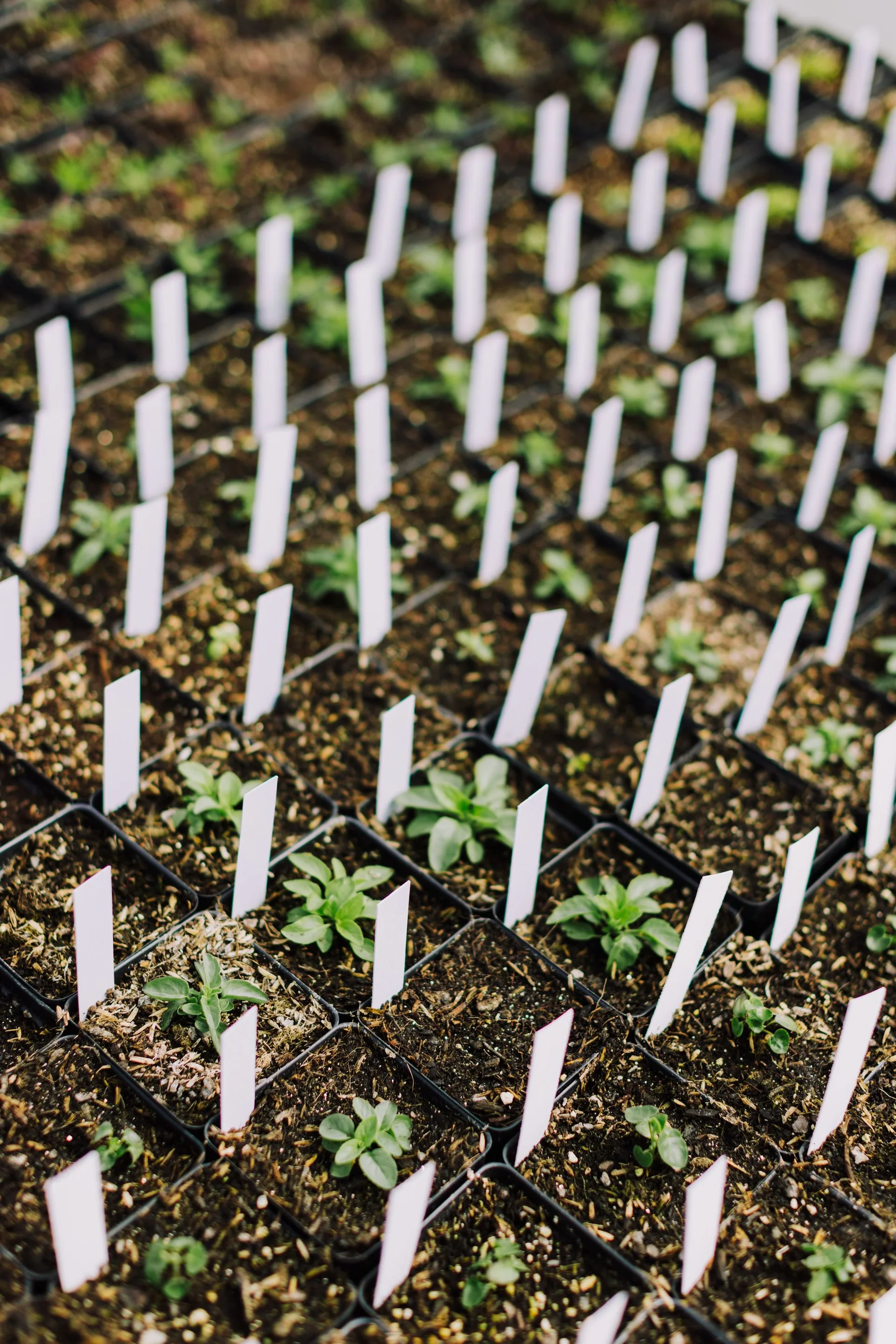
A school garden often restarts with a new class, a new teacher, or a summer when nobody watered the beds. Seed records make that restart less dependent on one person’s memory. The record does not need to be a complicated database; it needs to survive a handoff and answer a few questions: what was planted, where the seed came from, how it performed, and whether it is safe and appropriate to share.
Build the record around the school year
Use one page or spreadsheet row for each seed lot and one map for each garden bed or container. Include crop, variety, supplier or donor, purchase or harvest year, and the class or group responsible. Add sowing date, location, and whether the seed was direct-sown or transplanted. These details help a teacher distinguish a seed problem from a timing or bed-placement problem.
Mark the school calendar constraints. Summer break, testing periods, and winter holidays affect sowing and harvest more than a generic garden calendar acknowledges. Choose crops that students can observe while school is in session or arrange a named caretaker when plants need attention. Record who will water, what the backup contact is, and when the class returns; an unassigned seedling tray is not a reliable curriculum plan.
For saved seed, add parent plant, harvest date, number of parent plants, and pollination notes. Use a crop that is appropriate for the school’s experience level and growing season. Penn State Extension lists peas, beans, tomatoes, peppers, and lettuce as reasonable beginner candidates, while warning that crossing remains possible. Do not assume a schoolyard’s separated beds guarantee purity if compatible varieties flower nearby.
Give students roles that create usable evidence
Assign small teams to sow, label, observe, and close the record. A label should be readable outdoors and should match the spreadsheet ID. Students can record germination counts, leaf changes, insect visitors, and harvest measurements without being asked to make a scientific claim the class did not test. Define the measurement first: “count leaves on three marked plants every Friday” is repeatable; “write whether it looks healthy” is less precise.
Keep photographs tied to dates and plants. A photo should show the label or map position when possible, but avoid including student faces or names unless the school has permission. Store images in the school’s approved system, not a public personal account. A printed photo log can be more dependable than a link that a future teacher cannot access.
Use a short note to distinguish observation from interpretation. “Seven of ten seeds emerged after eight days” is an observation. “The packet was bad” is an interpretation that may overlook temperature, watering, or sowing depth. Encourage students to list two possible explanations and one next check. That habit makes the record useful for the next class without overstating the result.
A handoff record for each packet
- Identity: crop, variety, seed-lot ID, and source.
- Timeline: date received, sow date, expected harvest range, and school-break coverage.
- Place: bed or pot number, sunlight notes, soil or potting mix, and irrigation method.
- Observation: sample size, emergence count, harvest amount, weather event, and dated photo.
- Seed collection: parent count, maturity cue, cleaning and drying method, and storage location.
- Permission and safety: supplier instructions, student-photo permissions, allergen concerns, and local sharing rules.
Store the record in two places approved by the school: for example, a printed binder and an institutional shared drive. Do not put private student information in a public garden notebook. Label seed containers with the same lot ID and keep them in a cool, dry, secure location away from classroom food supplies. If a lot is uncertain or a plant showed disease, mark it “do not distribute” until an adult has checked local guidance.
Plan seed collection around maturity and safety
Harvest seed only when it is mature and dry enough for the species. A school schedule may end before pods or flower heads are ready; assign a responsible adult to finish the process or choose a different crop. Do not let students taste unknown plant parts. Use gloves and clean tools where plant sap or sharp stems create a hazard, and follow school policies for allergens and handwashing.
After collection, dry seed in a labeled, well-ventilated place. Keep it separate from classroom craft materials and food. Avoid sealing damp seed in a jar. Before the next school year, test a small sample and tell students the count and conditions. If the result is weak, use the packet for observation rather than promising a full planting.
Make records serve the next teacher
End the term with a brief “what to repeat / what to change” note. Keep only claims supported by the record. If a variety produced well in one raised bed, write where and when; do not conclude it is best for every school. A future teacher can compare similar trials and gradually build local knowledge without inheriting a legend.
Make the packet record survive the summer break
Schools must follow district policies, child-safety requirements, food-handling rules, plant quarantine regulations, and permission procedures. Crop calendars and seed-saving rules vary by region. This article is a recordkeeping framework, not a curriculum or food-safety plan; consult local Extension and the school’s facilities and risk staff before collecting or distributing seed.
Sources and further reading
- Seed Saving Basics — Penn State Extension
Seed labeling, parent selection, harvest maturity, and storage.
- Seed and Seedling Biology — Penn State Extension
Germination testing and seedling biology for student observations.