
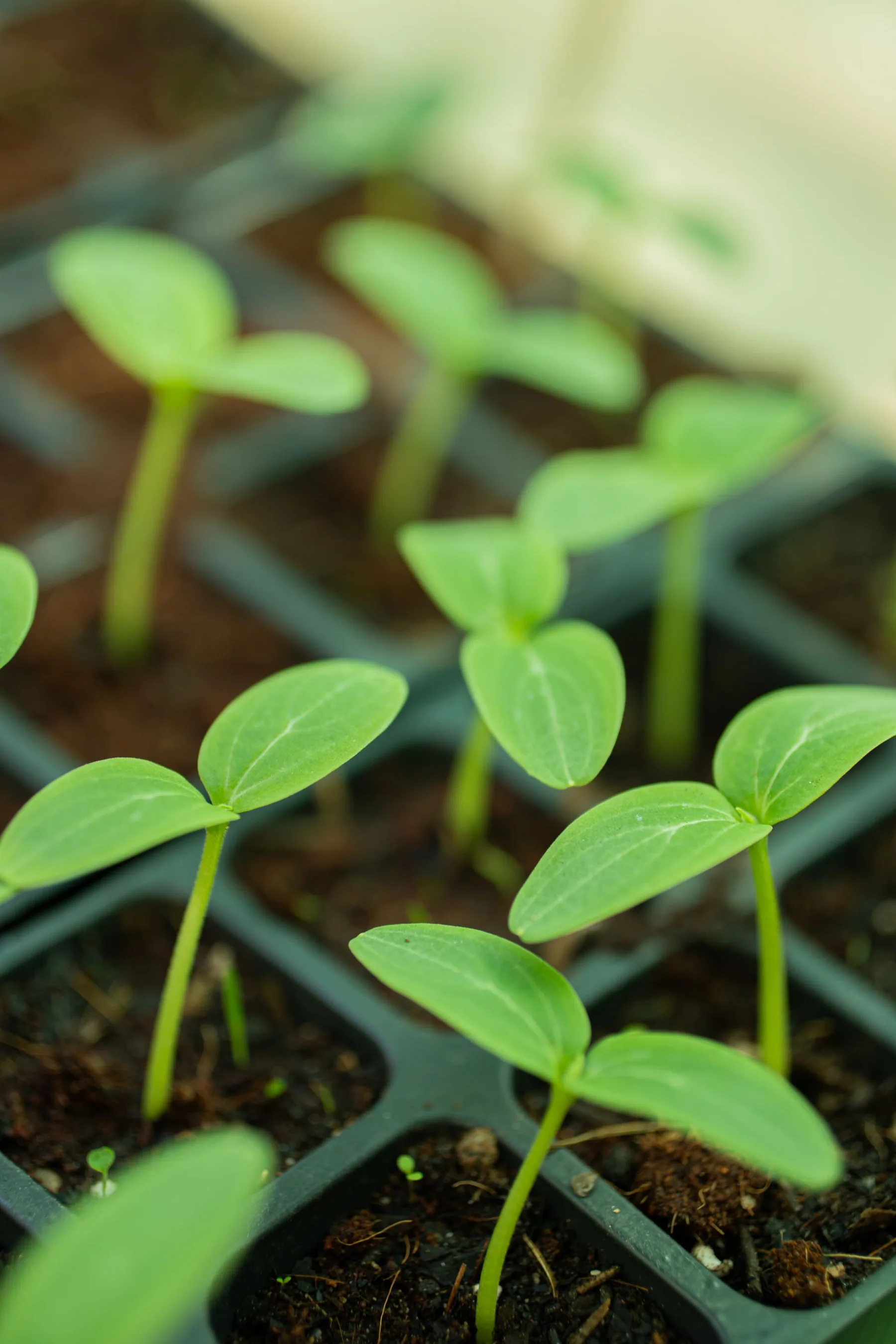
A seed-starting calendar is most useful when it begins with the date a transplant can safely go outside, then works backward through the crop’s indoor growing period and hardening-off days. A generic “start in March” list ignores latitude, frost risk, window light, and the space available for seedlings. The calendar should help you sow the right amount at the right time and prevent a crowded tray from outgrowing its light.
Start with a local planting date
Find the expected last spring frost range for your location from a local Extension service or climate resource. Frost dates describe probability, not a promise. A low courtyard, urban heat island, and exposed balcony can each differ from the nearest weather station. Decide whether your crop is tender or cold tolerant, and use the recommended transplant conditions for that species rather than a single last-frost date for the whole garden.
For crops that can be direct-sown, compare that option with starting indoors. A seedling tray is useful for a long-season crop or a small garden where an early start matters, but it adds light, watering, and transplant work. Some crops resent root disturbance and are simpler to sow in their final container. Read the packet and a regional Extension guide before assuming all vegetables benefit from indoor starting.
Work backward by crop
Read the seed packet for the recommended indoor start range, days to germination, and transplant age. The stated number of weeks is a planning estimate; seedling growth changes with light, temperature, and variety. Set a target transplant week, subtract the crop’s start interval, then reserve a few days for delays. Add the dates to a calendar with the seed packet’s source beside them.
Group crops by similar light and temperature needs. A warm-season tomato and a cool-season lettuce may not belong on the same heat mat or under the same watering schedule. Label trays before sowing. If the home has only one bright window, limit the number of seedlings to what the available light can support or add a suitable grow light with a timer.
A backward-planning worksheet
- Transplant window: note the local frost probability and crop temperature tolerance.
- Indoor start range: copy the crop-specific packet or Extension guidance and source.
- Germination time: include the expected range and any treatment such as soaking or stratification.
- Tray space: count cells or pots available and sow only the number you can maintain.
- Light plan: record window hours or lamp schedule, fixture distance, and room temperature.
- Hardening off: reserve a gradual transition period before transplanting into outdoor sun and wind.
Avoid starting too early
Seedlings that stay indoors too long can become root-bound, stretched, or difficult to harden off. If the outdoor bed is not ready, a larger pot takes more space and does not solve weak light. Plan the calendar around the actual garden: available containers, balcony temperature, and when the weather allows gradual outdoor exposure. A late start may produce a healthier transplant than weeks in a crowded tray.
Check the seedling light at leaf height. Minnesota Extension recommends long daily light periods for seedlings and cautions that windowsills may be too cold at night or too hot in daytime. Use a timer for predictable lighting, but provide a dark period. Keep the tray away from a hot radiator and cold glass. Rotate trays only if the light is uneven; a grow light should cover the whole flat.
Schedule successive crops carefully
For greens or herbs, sow small batches a week or two apart only if the crop, season, and household demand justify it. The best interval depends on days to maturity and usable space. Use the first batch’s emergence as a trigger for the next. In summer, heat can reduce lettuce quality; in late fall, short days slow growth. A calendar should include a note to pause or change varieties when conditions shift.
Keep a backup plan for poor germination. A small paper test before sowing can identify an old lot, but use enough seed to leave the planned crop intact. If seedlings fail, note whether the problem affected one lot or every tray; conditions such as temperature and water may be responsible. Do not reseed every crop without checking the cause.
Harden off as a scheduled step
Move seedlings into outdoor conditions gradually before transplanting. Start in a sheltered, shaded place and increase exposure over several days as local weather permits. Protect from strong wind and intense midday sun. A greenhouse or cold frame can speed the transition, but a closed structure can overheat. Check plants and temperature rather than leaving a tray outdoors on a fixed routine.
Transplant when the soil and forecast suit the crop. Water the root ball, plant at the crop’s recommended depth, and provide aftercare. Keep a record of actual transplant date and survival. If a frost returns, protect plants using a method appropriate to the crop; a calendar’s target week is not a guarantee of safe weather.
Improve next year’s dates
At season’s end, compare planned and actual dates, germination, transplant survival, and first harvest. Update the calendar with local observations. Keep packet dates separate from your own records so a future grower knows which timing came from a supplier and which came from one season on your site.
Update dates from actual emergence
Indoor starting dates depend on latitude, crop, cultivar, seed age, light, and transplant conditions. Use local Extension calendars and current forecasts. This worksheet does not provide a universal sowing date, and it does not imply that every crop should be started indoors.
Sources and further reading
- Starting seeds indoors — University of Minnesota Extension
Seed starting timelines, window limitations, indoor light, and seedling care in Minnesota.
- Sowing Annual Seeds — Penn State Extension
Annual seed starting, direct sowing, and packet-guided timing.