
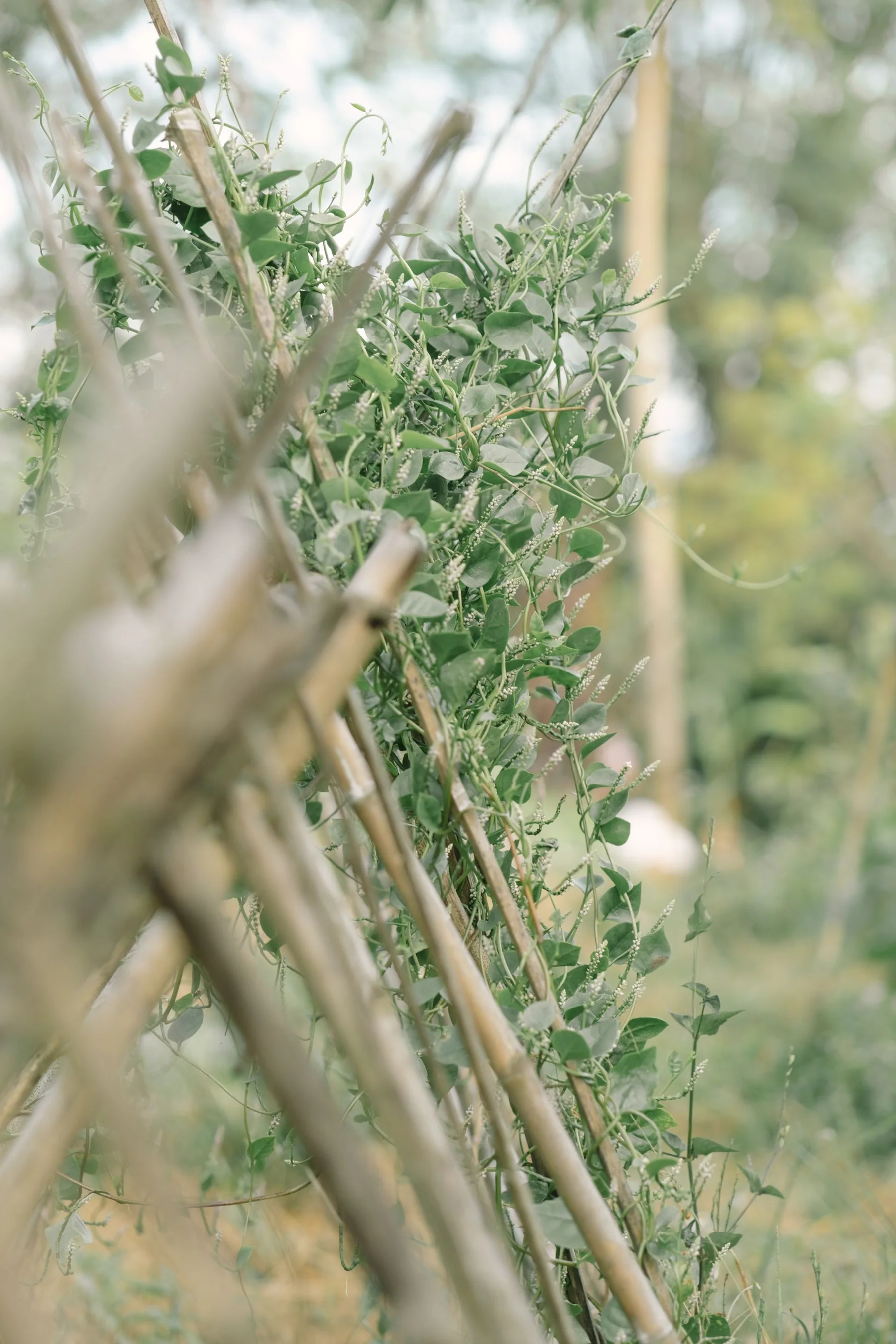
A trellis can free a balcony floor and bring leaves into a brighter layer, but a tall plant also catches wind and adds weight. The support must be part of the garden plan, not a last-minute stick pushed into a pot. Measure the site, choose a crop that can climb within the available height, and check building rules before attaching anything to a railing or wall.
Choose the crop and support together
Read the variety’s mature height, climbing habit, and fruit weight before buying a trellis. Pole beans and peas can climb on lighter supports than a heavy squash vine or an indeterminate tomato. A compact bush cultivar may need no vertical structure. Do not treat every “vertical garden” product as suitable for a balcony; some systems require wall anchors or are designed for ground beds.
Check the balcony’s approved attachment points and load limits. A trellis fixed to a railing can change wind forces and create a falling-object hazard. Use freestanding supports only if the base is stable and the container can safely carry the load. Keep the structure inside the railing and secure loose ties so they cannot blow onto a neighboring unit or public space. Ask property management about drilling, screening, and visible fixtures.
Match the root container to the crop. A tall vine needs enough soil volume, drainage, and root anchoring to remain stable when watered. A shallow box can dry quickly and tip when foliage catches wind. Avoid placing heavy containers on a narrow ledge. A large pot can be difficult to move once filled, so map its location before planting and consider how it will be watered and winterized.
Plan light without shading everything below
Place the trellis where the crop can reach direct light without blocking the only bright window or the neighboring containers. A north-south or east-west orientation changes how the structure casts shade; the right direction depends on the balcony and sun path. Observe morning and afternoon light for several days before fixing the support in place.
Vertical leaves can shade lower pots and reduce airflow. Leave space between the trellis and a wall so leaves can dry after rain and be inspected for pests. Tie stems loosely with soft material and check the ties as growth thickens. Tight loops can girdle a stem. Train young shoots gradually rather than forcing a brittle vine around a sharp corner.
A balcony trellis setup check
- Crop: verify mature height, climbing habit, and expected fruit weight.
- Structure: use an approved attachment or stable freestanding base; check the wind load.
- Container: choose adequate depth, drainage, and a safe filled weight for the location.
- Light: map the shade cast on windows, doors, and neighboring pots.
- Water: confirm a hose or watering can can reach the root zone without runoff below.
- Maintenance: leave room to inspect leaves, harvest fruit, and remove the structure at season’s end.
Water and feed for a tall root system
Vertical plants can dry fast because more leaf area catches sun and wind. Check soil moisture below the surface and water slowly so the entire root zone wets. A quick splash can run through a dry mix without reaching the center. Mulch may help in some containers, but keep it away from stems and inspect for excessive moisture after rain.
Use fertilizer according to the crop and potting-medium instructions. Heavy feeding can produce lush leaves at the expense of flowers or fruit, and salts can build up in a confined container. If leaves yellow, examine watering, root binding, and light before adding nutrients. A soil/media test may be useful after repeated amendments; do not apply a bed-soil recommendation to a container without checking the method.
Protect the structure during weather changes
Before a storm, inspect ties and supports, harvest heavy fruit, and remove a failed structure if it cannot be secured safely. Do not wait for a high-wind warning to discover that a trellis is attached only by a loose clip. After rain, check for waterlogged soil and loose anchors. In winter, clean and store supports according to their material so rust or cracked joints do not carry into the next season.
Learn from one season
Record crop, support dimensions, attachment, container size, wind exposure, watering, and harvest. Photograph the balcony from the same angle at planting and midseason. If lower pots became shaded or the trellis rocked in gusts, adjust the layout before expanding. One balcony’s success does not establish a safe attachment method for another building; the property’s own rules govern.
Limits
Balcony load, fire safety, railing, and attachment rules vary by building and jurisdiction. This guide does not certify a structure or calculate its wind load. Use manufacturer instructions and building approval; keep all pots and supports inside the safe boundary and away from accessible paths.
Remove and store the support cleanly
At season’s end, cut vines into manageable sections before loosening ties. Check the pot for roots wrapped around stakes and avoid pulling hard enough to crack the container. Wash reusable netting and store it dry. Label which support suited the crop and which failed; this prevents a lightweight pea trellis from being reused automatically for a heavier fruiting vine. If the structure was attached to a building, restore the approved surface and check that fasteners did not loosen during the season.
Sources and further reading
- Container Vegetable Gardening: Four Keys to Success — Penn State Extension
Container size, crop selection, support needs, light, and water management.
- Crop and field planning tools for vegetable farmers — University of Minnesota Extension
Crop planning and harvest windows to match a small growing space.